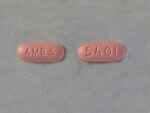
Fact-checked against FDA labeling, FDA safety communications, and NIAAA guidance. Current as of October 2026. Educational information only; if you have questions about your own prescription, ask your prescriber or pharmacist.
Picture a common scene. You land after a long cross-country flight, check into a hotel around 10 p.m., and your body clock says it’s still early. You order a glass of wine with a late dinner to unwind. Then, knowing tomorrow starts with an 8 a.m. meeting, you take the zolpidem tablet your doctor prescribed for travel nights. One glass and one pill. It feels harmless, even sensible.
It isn’t. Mixing Ambien and alcohol is one of the most clearly warned-against combinations in sleep medicine. The FDA’s medication guide for Ambien tells patients not to take it if they drank alcohol that evening or before bed. This article explains why, by following what happens inside your body when the two meet, what that can lead to, and what to do if someone you’re with has taken both and won’t wake up.
If someone has taken Ambien with alcohol and can’t be woken, is breathing slowly or irregularly, or has blue or gray lips, call 911 now. For non-emergency questions about an exposure, call Poison Control at 1-800-222-1222.
Same lock, two keys: what happens inside the body
To see why this pairing is risky, it helps to know where both substances act. Your brain has a built-in braking system. Its main chemical messenger is GABA (gamma-aminobutyric acid), which calms nerve activity. GABA works by docking onto receptors on brain cells, especially one type called the GABA-A receptor. Think of that receptor as a lock that, when turned, quiets the cell down.
How zolpidem turns the lock
Zolpidem is not a benzodiazepine, but it binds to the GABA-A receptor in a similar way. It makes the receptor respond more strongly to the GABA that’s already there. Zolpidem prefers a particular subtype of the receptor that’s heavily involved in sedation, which is why it’s good at bringing on sleep. The result: brain activity slows, and you drift off.
How alcohol turns the same lock
Alcohol is chemically very different, but it also boosts GABA-A activity, and it dampens the brain’s main “go” signal, glutamate. That’s why a few drinks lower inhibitions, then slow speech and coordination, and in larger amounts cause blackouts and unconsciousness.
Why the effects add up
When two substances push the same braking system, their effects stack. Doctors call this additive central nervous system (CNS) depression. The current Ambien prescribing information says the risk of CNS depression rises when zolpidem is used with other CNS depressants, alcohol included, and that alcohol adds to zolpidem’s effects on alertness and motor skills. In practice, a dose of zolpidem that would normally put you to sleep safely can, with alcohol on board, push you past “sleepy” toward confusion, poor coordination, and in more serious cases dangerously slowed breathing.
Some of the brain areas affected control breathing, memory formation, balance, and judgment. That’s why the risks of this combination, which we’ll walk through below, cluster in exactly those areas.
What the label says about Ambien and alcohol
The FDA’s labeling for Ambien addresses alcohol in several places. Paraphrased in plain language:
- The medication guide tells patients not to take Ambien if they drank alcohol that evening or before bed.
- The warnings section says the risk of CNS depression and next-day impairment increases with alcohol and other sedating drugs.
- The boxed warning on complex sleep behaviors (sleepwalking, sleep-driving, and other activities while not fully awake) notes that these events have happened with or without alcohol. Alcohol isn’t required for them, but nothing about it makes them less likely.
- Patient counseling reminds people to take the drug only when they can stay in bed for a full seven to eight hours.
Notice what the label does not do. It doesn’t give a “safe” amount of alcohol, and it doesn’t say “wait X hours after drinking.” The instruction is tied to the evening itself. If you’ve had alcohol that night, the label’s guidance is to skip the dose. For a broader rundown of what zolpidem can do on its own, see our guide to Ambien side effects.
Does it matter which zolpidem product you take?
Not for the basic rule. Zolpidem comes as immediate-release Ambien, extended-release Ambien CR, tablets that dissolve under the tongue, and an oral spray. All of them carry the same boxed warning, and alcohol adds to the effects of each one. The extended-release version is built to keep drug levels up longer into the night, and the FDA has advised that people taking Ambien CR should not drive or do anything requiring full alertness the next day. With Ambien CR, then, a drink adds to an effect that already lasts longer.
What the combination can do
The National Institute on Alcohol Abuse and Alcoholism (NIAAA) keeps a table of medicines that interact badly with alcohol. For prescription sleep aids such as Ambien and Lunesta, NIAAA’s harmful interactions guide lists drowsiness and dizziness, slowed or labored breathing, impaired coordination, unusual behavior, and memory problems. Here’s what each of those means in real life, along with what the FDA label adds.
| Risk | What it can look like | Why the mix makes it worse |
|---|---|---|
| Slowed or shallow breathing (respiratory depression) | Snoring that turns to gasping, long pauses between breaths, bluish lips, can’t be roused | Both substances blunt the brain’s breathing drive; risk is highest with heavy drinking, sleep apnea, lung disease, or other sedatives |
| Memory blackouts | No recall of conversations, texts, or actions after taking the pill | Zolpidem can block new memory formation, and alcohol does the same; together the gap can be longer and deeper |
| Complex sleep behaviors | Sleepwalking, sleep-eating, sleep-driving, leaving the house, with no memory | The boxed warning applies with or without alcohol; alcohol adds confusion and lowers judgment |
| Falls and injuries | Getting up at night and falling, hitting the head, broken hips or wrists | Combined effects on balance and alertness; NIAAA notes older adults face particular risk of falls |
| Next-morning impairment | Slow reactions, drowsy driving, poor focus, sometimes without feeling impaired | The label says next-day impairment risk climbs with alcohol, higher doses, and less than a full night in bed |
| Unusual or out-of-character behavior | Disinhibition, agitation, aggression, confusion | Both lower inhibitions and distort judgment |
Back to that hotel room. One glass of wine and one tablet might well end with nothing more than heavy sleep and a foggy morning. But the risks above don’t require a lot of alcohol to show up. And they’re unpredictable from one night to the next.
Why the “just one drink” rule fails
Many people assume a single drink is fine because they feel normal after one. There are several reasons that reasoning breaks down with zolpidem.
“One drink” isn’t a fixed amount
A standard drink in the U.S. is about 14 grams of pure alcohol: roughly 12 ounces of regular beer, 5 ounces of wine, or 1.5 ounces of 80-proof liquor. Restaurant wine pours, craft beers, and mixed drinks often contain much more. Your “one” may be closer to two.
Bodies vary, and women are hit harder
NIAAA explains that women generally have less body water than men, so the same amount of alcohol produces a higher blood alcohol level. Women also clear zolpidem more slowly, which is why the FDA cut the recommended starting dose for women in 2013. Put those together and a woman may face a stronger combined effect from the same drink and the same pill. Our article on Ambien dosage for men vs women covers that difference.
Age, liver, and other medicines change the math
NIAAA notes that alcohol stays in the body longer as people get older, and older adults are more likely to take several medicines that interact with it. The liver handles both zolpidem and alcohol, so liver disease slows the clearance of both. Antihistamines, pain medicines, and antidepressants can all add sedation on top.
You can’t judge your own impairment
This is the key problem. Both substances interfere with the very brain functions you would use to notice you’re impaired. And the memory effect means that if something does go wrong in the night, you may not remember it. “I felt fine” is not reliable evidence.
Alcohol makes sleep worse anyway
Alcohol can make you drowsy at first, but as it wears off during the night it tends to fragment sleep, causing more awakenings in the second half of the night. So a drink at bedtime may actually undercut what you took the sleeping pill for. That’s part of why sleep specialists generally advise against using alcohol as a sleep aid at all.
Planning ahead beats deciding at midnight
Most risky Ambien and alcohol nights aren’t planned. They happen at weddings, work dinners, holidays, and the first night of a trip, when sleep feels urgent and a drink is already in hand. Deciding in advance makes the safer choice easier:
- Pick one in advance. If you know you’ll want a drink at the event, plan that as a no-pill night.
- Ask your prescriber about travel nights. They may suggest other ways to handle jet lag, such as light exposure and adjusted sleep timing.
- Keep the pill bottle out of the bedroom on nights you’ve been drinking, so you aren’t tempted to take it half-asleep.
Reader questions
These are the questions people most often ask about Ambien and alcohol. The answers reflect FDA labeling and general medical guidance; your prescriber can tailor them to you.
How long after drinking can I take Ambien?
There’s no official number of hours. The FDA medication guide frames it by the evening: if you drank alcohol that evening or before bed, don’t take Ambien that night. Alcohol is cleared at different rates in different people, and no home method reliably tells you when it’s fully gone. If you drank and can’t sleep, a night without the pill is the safer choice. If this happens often, talk to your prescriber about a plan.
I took Ambien and then realized I’d had a drink. What should I do?
Don’t take anything else, and don’t drive. Go to bed in a safe spot, tell someone in the house what happened, and ask them to check on you. If you feel very confused, faint, or short of breath, or if someone can’t wake you, call 911. For guidance on a situation that isn’t an emergency, Poison Control (1-800-222-1222) is free, confidential, and open 24 hours.
Can I drink the day after taking Ambien?
Zolpidem’s main effects wear off over the night in most people, though some still have meaningful blood levels in the morning, especially women and people taking the extended-release version. Daytime drinking the next day doesn’t carry the same warning as drinking the same evening, but the safest pattern is not to drink on nights you plan to take it. If you find you’re regularly choosing between a drink and your sleep medicine, that’s worth raising with your doctor. Similar questions come up with other medicines; compare our pages on Valium and alcohol, Adderall and alcohol, and albendazole and alcohol.
Higher-risk combos: when it’s not just alcohol
Alcohol is the most common thing people mix with zolpidem, but it’s rarely the only one. Each additional sedating substance adds to the load on the brain’s braking system.
Opioids
Opioid pain medicines (such as oxycodone, hydrocodone, morphine, or codeine cough syrups) suppress breathing on their own. In 2016, the FDA required boxed warnings on opioids and benzodiazepines about combining them. The FDA’s August 2016 safety communication warned that using opioids with benzodiazepines or other CNS depressants can cause profound sedation, slowed breathing, coma, and death. It specifically named zolpidem among the sleep drugs in that group, and told patients on opioids not to drink alcohol. In one study the FDA cited, overdose death rates were about 10 times higher in people dispensed both opioids and benzodiazepines than in those on opioids alone. Opioids plus zolpidem plus alcohol is about as dangerous a combination as exists in an ordinary medicine cabinet.
Benzodiazepines
Drugs like alprazolam (Xanax), lorazepam (Ativan), diazepam (Valium), and temazepam (Restoril) act on the same GABA-A receptors as zolpidem. Taking them together, or adding alcohol to either, multiplies sedation. Our comparison of Ambien vs Restoril explains how these drug classes differ and overlap.
Cannabis
Cannabis, especially edibles with delayed and unpredictable onset, can add drowsiness, impaired coordination, and memory problems. Research on cannabis combined with zolpidem is limited, which is a reason for caution rather than reassurance. Tell your prescriber if you use it.
Sedating antihistamines and over-the-counter sleep aids
Diphenhydramine and doxylamine are in many “PM” pain relievers, cold medicines, and store-brand sleep aids. NIAAA lists these OTC sleep products among those that interact with alcohol. Layering one on top of zolpidem, with or without a drink, deepens sedation and raises fall risk, especially in older adults.
Others to ask about
- Muscle relaxants such as cyclobenzaprine or carisoprodol
- Gabapentin and pregabalin
- Some antidepressants and antipsychotics with sedating effects
- Herbal sleep aids such as valerian, which NIAAA notes can increase drowsiness with alcohol
The simplest safeguard: keep one up-to-date list of everything you take, including supplements and cannabis, and show it to your pharmacist when you fill zolpidem.
Overdose signs and what to do
According to the Ambien label, overdose effects range from deep sleepiness to coma, along with breathing and heart problems, and deaths have occurred, particularly when zolpidem was combined with other CNS depressants. Here’s how to recognize trouble and respond.
Warning signs
- Can’t be woken up, or wakes briefly and drifts off again mid-sentence
- Slow, shallow, or irregular breathing, or long pauses between breaths
- Loud snoring or gurgling sounds that suggest a blocked airway
- Blue, gray, or pale lips and fingertips; cold, clammy skin
- Severe confusion, slurred speech, or inability to stand
- Vomiting while very drowsy
What to do, step by step
- Call 911. Say what was taken and roughly when, if you know. Don’t wait to see if the person “sleeps it off.”
- Try to wake them. Say their name loudly and rub their breastbone firmly with your knuckles.
- Put them in the recovery position if they’re breathing but not fully awake: on their side, top knee bent forward, head tilted slightly back so the airway stays open and vomit can drain.
- Watch their breathing. If they stop breathing, follow the dispatcher’s instructions for CPR.
- If opioids might be involved, give naloxone (Narcan) if it’s available. It won’t reverse zolpidem or alcohol, but it can reverse an opioid’s effect on breathing and it won’t harm someone who hasn’t taken opioids.
- Stay with them until help arrives, and gather pill bottles to hand to paramedics.
Things not to do: don’t put them in a cold shower, don’t give coffee or anything by mouth, don’t try to make them vomit, and don’t leave them alone to sleep. For questions about an exposure when the person is awake and alert, call Poison Control at 1-800-222-1222.
If you drink regularly and can’t sleep
For some people, this isn’t about a single hotel night. They drink most evenings, sleep badly, and either want a sleeping pill or already have one. That combination deserves an honest look, because alcohol and insomnia feed each other.
How alcohol drives insomnia
Alcohol may help you fall asleep faster at first. But with regular use, the body adapts. Sleep becomes lighter and more broken, especially in the early-morning hours, and people often need more alcohol to get the same drowsy effect. When someone who drinks heavily tries to cut back, sleep can get worse for a while before it improves. Adding zolpidem to that cycle doesn’t fix it, and it piles a sedative interaction on top. NIAAA’s patient guidance and the MedlinePlus zolpidem page both say to tell your doctor if you have a history of heavy drinking before starting a sleep medicine.
Treatment that doesn’t involve a pill
Cognitive behavioral therapy for insomnia (CBT-I) is a structured program that retrains sleep habits and the thoughts that keep people awake. It includes techniques like sleep restriction (temporarily limiting time in bed to consolidate sleep), stimulus control (using the bed only for sleep), and sleep education. The American College of Physicians recommends CBT-I as the first-line treatment for chronic insomnia in adults, ahead of medication. It can be delivered in person, by phone, online, or through apps, and it has no interaction with alcohol.
Talking to your doctor
Be straightforward about how much you drink. Doctors aren’t there to judge; they need accurate information to prescribe safely. Useful questions to bring:
- Is zolpidem safe for me, given how much I drink?
- Could my drinking be causing my insomnia?
- Can you refer me to CBT-I or a sleep specialist?
- If I want to cut back on alcohol, is it safe to do on my own, or do I need medical support?
- If I’ve been taking zolpidem for a long time, how should we plan to reduce it?
That last question matters. Stopping zolpidem suddenly after long use can cause rebound insomnia and withdrawal symptoms, and stopping heavy drinking suddenly can be medically dangerous. Both should be planned with a clinician. Our article on Ambien withdrawal explains what to expect when a prescriber guides the process.
Where to get help
If drinking feels hard to control, the SAMHSA National Helpline at 1-800-662-4357 offers free, confidential treatment referrals and information, 24 hours a day, every day of the year. If you’re having thoughts of harming yourself, call or text 988 to reach the 988 Suicide & Crisis Lifeline.
The short version to remember
Ambien and alcohol press on the same brake in your brain. Together, they can slow breathing, erase memories, raise the odds of sleepwalking or sleep-driving, cause falls, and leave you impaired the next morning, often without you realizing it. The FDA’s guidance is simple: if you’ve had alcohol that evening, don’t take Ambien that night. Back in that hotel room, the better choice would have been the wine or the pill, not both. Skipping the pill might mean a rougher night, but it’s a far smaller risk than the alternative.
Sources and further reading
- FDA: Ambien (zolpidem tartrate) prescribing information and medication guide
- NIAAA: Harmful Interactions: Mixing Alcohol with Medicines
- FDA: Boxed warning on combined use of opioids and benzodiazepines (2016)
- American College of Physicians: CBT-I as initial treatment for chronic insomnia
- SAMHSA National Helpline