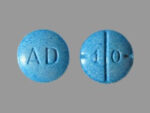
Medically informative content. Last updated: October 2026. This article is educational and is not a substitute for advice from your doctor or pharmacist.
Picture a Friday evening. You took your Adderall that morning, had a long day, and now someone hands you a drink. You feel fine. Alert, even. A second drink goes down just as easily. By the third, you still do not feel drunk, so why stop?
That feeling of being “fine” is exactly the problem. Adderall and alcohol pull the body in opposite directions, and the stimulant can hide how intoxicated you really are. This article explains what happens inside your body when the two meet, debunks a few common myths, and lays out practical ways to stay safe if you take Adderall for ADHD.
Short Answer: Can You Drink on Adderall?
Mixing Adderall and alcohol is not recommended. Adderall can mask the sedating effects of alcohol, so people tend to drink more than they realize. This raises the risk of alcohol poisoning, risky decisions, and injury. The combination also places extra strain on the heart, may worsen side effects of both substances, and can make ADHD symptoms and mood worse the next day. If you take Adderall and want to drink, talk to your prescriber first about your specific dose and health history.
Opposite Forces: A Stimulant Meets a Depressant
To understand why this combination is risky, it helps to know what each substance does on its own.
| Adderall | Alcohol | |
|---|---|---|
| Drug class | Central nervous system stimulant | Central nervous system depressant |
| Main brain effect | Increases dopamine and norepinephrine | Enhances GABA, dampens glutamate |
| Effect on alertness | Raises it | Lowers it |
| Heart rate | Increases | Can increase, especially with binge drinking |
| Blood pressure | Increases | Rises with heavy or regular use |
| Body temperature and fluids | Raises temperature; reduces thirst cues | Acts as a diuretic; dehydrates |
| Judgment | Can increase confidence and risk-taking at high doses | Impairs judgment and coordination |
A common assumption is that these forces cancel each other out. They do not. The stimulant changes how intoxicated you feel, but it does not change how intoxicated you are. Your blood alcohol concentration, reaction time, and liver workload all stay the same.
The Five Main Risks of Mixing Adderall and Alcohol
Risk 1: The Masking Effect and Alcohol Poisoning
Normally, alcohol makes you sleepy, slow, and clumsy. Those signals act as a natural brake. Adderall can turn down those cues, so you may feel sober at a level of intoxication that would usually send you home. Researchers sometimes describe this as being “wide-awake drunk.”
The result is that people drink more and for longer. Surveys of college students have consistently found that those who use prescription stimulants nonmedically are more likely to binge drink. Overdrinking can lead to alcohol poisoning, which causes confusion, vomiting, slow or irregular breathing, low body temperature, and loss of consciousness. The National Institute on Alcohol Abuse and Alcoholism explains these warning signs in detail.
Risk 2: Extra Load on the Heart
Adderall raises heart rate and blood pressure. Heavy drinking can also raise blood pressure and trigger irregular rhythms, sometimes called “holiday heart.” Together, they increase the workload on the cardiovascular system. For most healthy young adults, a single episode is unlikely to cause a heart attack. However, the risk climbs for people with undiagnosed heart conditions, high blood pressure, high stimulant doses, or binge drinking. The serious Adderall side effects section of our guide covers the cardiac warning signs.
Risk 3: Dehydration and Overheating
Stimulants raise body temperature and reduce awareness of thirst. Alcohol increases urination. Add a warm party, dancing, or exercise, and dehydration can set in quickly. Dehydration worsens headaches, dizziness, and heart strain, and makes hangovers harsher.
Risk 4: Riskier Decisions
Alcohol lowers inhibition. A stimulant can add a layer of confidence and energy. Together, they can encourage decisions you would not normally make, such as driving, unprotected sex, or taking additional substances. Feeling alert does not mean you are fit to drive. Reaction time and judgment remain impaired by alcohol regardless of how awake you feel.
Risk 5: A Worse Next Day
Even without a crisis, the day after can be rough. Many people report:
- A stronger stimulant “comedown” combined with a hangover
- Poor sleep, because Adderall delays sleep and alcohol fragments it
- Low mood, irritability, or anxiety
- Worse focus, which can make ADHD symptoms feel more intense
Over time, a pattern of drinking on Adderall can quietly undo the gains that treatment was supposed to deliver.
Myths vs Facts
| Myth | Fact |
|---|---|
| “Adderall cancels out alcohol, so I can drink more safely.” | It only hides the feeling of intoxication. Your blood alcohol level and impairment are unchanged. |
| “If I feel fine, I can drive.” | Alertness is not the same as sobriety. Driving after drinking is dangerous regardless of stimulants. |
| “One drink is always okay.” | For some people it may be low risk, but this depends on dose, timing, health, and what your doctor advises. There is no universal safe amount. |
| “XR is safer with alcohol than IR.” | XR stays active longer, so the window of overlap is often larger, not smaller. Neither is safe to mix. |
| “Skipping my dose for the day solves everything.” | Do not change your prescribed dosing to make room for drinking without talking to your prescriber. |
Does Timing Matter? How Long After Adderall Can You Drink?
This is one of the most searched questions on the topic, and there is no single number that fits everyone. Here is what affects the answer:
- Formulation. Immediate-release Adderall typically works for about 4 to 6 hours. Adderall XR is designed to last about 10 to 12 hours. Our comparison of Adderall IR vs XR explains the difference.
- Half-life. Amphetamine’s half-life in adults is roughly 10 hours, longer for the levo component. So even after the noticeable effects fade, a meaningful amount is still in your bloodstream.
- Dose. Higher doses take longer to clear.
- Urine pH and kidney function. Both change how fast amphetamine leaves the body.
Because the drug lingers well beyond its “felt” effects, many clinicians advise avoiding alcohol on the days you take Adderall, or at minimum not drinking while it is still active. Your prescriber can give advice tailored to your dose and schedule. For how long amphetamine remains detectable, see how long Adderall stays in your system.
What About Drinking First, Then Taking Adderall?
Taking Adderall to “sober up” or push through the evening is a form of misuse. It carries the same masking risk, adds heart strain, and wrecks sleep. If you have been drinking, it is safer to skip a non-prescribed dose and let the alcohol clear. Do not take extra doses to counteract a hangover either.
Who Faces the Highest Risk?
- People with heart conditions or high blood pressure. Even modest increases in heart strain matter.
- Young adults and college students. The FDA has identified people aged 18 to 25 and college students as the groups most at risk of stimulant misuse, and they also have high rates of binge drinking.
- Anyone using Adderall without a prescription. Doses are unpredictable, and counterfeit pills may contain other substances, including fentanyl or methamphetamine.
- People with a history of substance use disorder. Combining substances raises the risk of developing dependence on one or both.
- People with anxiety, depression, or bipolar disorder. Both substances can destabilize mood.
- People taking other medications. Antidepressants, sleep aids, and anxiety medications can interact with either substance.
Adderall, Alcohol, and ADHD: A Complicated Triangle
People with ADHD have higher rates of alcohol use disorder than the general population. Impulsivity, emotional dysregulation, and a drive for stimulation all play a role. Here is the encouraging part: research suggests that effective ADHD treatment, including stimulants, is associated with a lower, not higher, risk of later substance problems for many patients.
That benefit relies on taking the medication as prescribed. Mixing it routinely with alcohol erodes that protective effect and introduces new risks. If you notice that you drink to calm down after your medication wears off, that is a useful insight to share with your prescriber. It may point to an end-of-day rebound that can be addressed with timing or formulation changes.
Comparing Risks With Other Medication-Alcohol Combinations
Alcohol interactions are not unique to Adderall, but the type of risk differs. With depressants such as benzodiazepines, the danger is that both drugs slow breathing, which can be fatal. Our article on Valium and alcohol covers that interaction. With stimulants, the danger comes from masking, heart strain, and behavior. Neither combination is a safe one.
Warning Signs: When to Get Emergency Help
Call emergency services (911 in the US) if someone who has taken Adderall and alcohol shows any of the following:
- Chest pain or tightness
- A racing, pounding, or irregular heartbeat
- Trouble breathing, or slow and irregular breathing
- Confusion, extreme agitation, paranoia, or hallucinations
- Seizures
- Very high body temperature or heavy sweating, or cold and clammy skin
- Repeated vomiting
- Unresponsiveness or inability to be woken
While you wait for help, keep the person on their side, stay with them, and do not try to “sober them up” with coffee, cold showers, or more stimulants.
A Practical Safety Plan If You Take Adderall
If you have a prescription and alcohol is part of your social life, these steps can reduce risk:
- Ask your prescriber directly. Bring your dose, schedule, and typical drinking habits. Honest numbers lead to better advice.
- Plan your days. Some people choose not to drink on medication days at all.
- Never take extra Adderall to stay out later or offset alcohol.
- Count your drinks rather than relying on how you feel.
- Alternate with water and eat a full meal.
- Arrange your ride home before the first drink.
- Do not combine with other drugs, including cannabis, MDMA, or cocaine, which add further unpredictability.
- Protect your sleep. Expect the next day to be harder and plan for it.
When Drinking on Adderall Becomes a Pattern
Occasional mistakes happen. A pattern is different. Consider getting support if you notice any of these:
- You regularly drink on medication days despite intending not to.
- You take more Adderall than prescribed to drink longer or recover faster.
- You use Adderall that was not prescribed to you.
- Friends or family have voiced concern.
- You feel unable to socialize without one or both substances.
Talking to your prescriber is a good first step. In the US, the SAMHSA National Helpline (1-800-662-4357) offers free, confidential treatment referrals 24/7. If you decide to stop Adderall, do so with medical guidance; our guide to Adderall withdrawal explains what to expect.
What About Other Stimulants and Alcohol?
The same principles apply to other ADHD stimulants, including methylphenidate (Ritalin, Concerta) and lisdexamfetamine (Vyvanse). There is one notable extra concern with methylphenidate: alcohol can change how the body processes it, producing a compound called ethylphenidate and raising blood levels of the drug. Some alcohol can also cause certain extended-release formulations to release medication faster. If you are weighing options, see Adderall vs Ritalin, Concerta vs Adderall, and Vyvanse vs Adderall. Wakefulness agents like modafinil are a different class, covered in Modafinil vs Adderall, but drinking with them is still not advised.
A Night Out, Hour by Hour: What the Combination Looks Like
To make the risks concrete, here is an illustrative evening for someone who took Adderall XR at 8 a.m. and starts drinking at 7 p.m. This is not a prediction of what will happen to you, just a way to see how the two substances overlap.
- 7:00 p.m. About 11 hours after the dose, a meaningful amount of amphetamine is still circulating. Appetite is low, so dinner is skipped or small.
- 7:30 p.m. First drink. On an empty stomach, alcohol is absorbed faster than usual.
- 8:30 p.m. Three drinks in. The person feels sociable and alert, not drunk. The usual cue to slow down is muted.
- 10:00 p.m. Five or six drinks. Heart rate is elevated from both substances. Thirst cues are weak, so little water is consumed.
- Midnight. As the stimulant effect finally fades, the full weight of the alcohol arrives. Nausea, dizziness, and poor coordination can set in quickly, and blood alcohol may be far higher than the person realized.
- Next morning. Short, broken sleep, a hangover, and a stimulant comedown overlap. Focus and mood are worse than either substance alone would cause.
The key moment is the late-night “drop,” when the masking wears off. That is when many emergency situations unfold, often after the person has decided to drive home or keep drinking.
Sleep: The Overlooked Casualty
Both substances damage sleep in different ways. Adderall delays the onset of sleep, especially if the dose was taken late or is long-acting. Alcohol may help you fall asleep faster, but it suppresses REM sleep and causes frequent waking in the second half of the night. Together, they can leave you with only a few hours of poor-quality rest.
For people with ADHD, sleep loss is particularly costly. It worsens attention, emotional control, and impulsivity the following day, which can make the medication seem like it is not working. A single night is recoverable. A weekly pattern can erode the benefits of treatment over months.
“Hangxiety” and the Emotional Comedown
Many people describe intense anxiety, guilt, or low mood the day after drinking on Adderall. Several things contribute: the stimulant comedown lowers dopamine activity, alcohol withdrawal causes a rebound in nervous system excitability, sleep is poor, and blood sugar may be unstable after skipped meals. If you already live with anxiety or depression, this combination can trigger a noticeably bad day.
If you find yourself regularly feeling this way, it is worth looking at the pattern rather than each individual night. Our guide to anxiety and shortness of breath may help if physical anxiety symptoms are part of what you experience.
How to Talk to Your Doctor About Drinking
Many patients underreport alcohol use because they worry about judgment or losing their prescription. In practice, honest information helps your prescriber keep you safe. Some tips:
- Give real numbers. “About four drinks on Friday and Saturday” is more useful than “socially.”
- Mention timing. Say when you take your dose and when you usually drink.
- Share what you notice. Racing heart, poor sleep, or feeling less drunk than expected are all relevant.
- Ask about alternatives. A shorter-acting formulation, earlier dosing, or a different medication may reduce overlap on social days.
- Ask about your heart. If you have a family history of heart problems, ask whether you need extra monitoring.
Prescribers are trained to discuss substance use without judgment. The goal is a plan that fits your real life, not an idealized one.
Frequently Asked Questions
What happens if you drink one beer on Adderall?
For many healthy adults on a standard dose, a single drink is unlikely to cause a crisis, but it can still raise heart rate, dull the drug’s benefit, and disrupt sleep. Whether it is acceptable for you depends on your health and dose, so ask your prescriber.
Can mixing Adderall and alcohol kill you?
Yes, in rare cases. Deaths have been linked to alcohol poisoning, heart rhythm problems, overheating, and accidents. Risk rises with higher doses, binge drinking, misuse, heart disease, and other drugs.
Why do I feel less drunk on Adderall?
The stimulant counteracts the sleepiness and sluggishness that normally signal intoxication. Your blood alcohol level is the same; you just cannot feel it as clearly.
Does alcohol make Adderall less effective?
Alcohol impairs attention, memory, and impulse control, which directly works against what ADHD treatment is meant to improve. It can also worsen sleep, which lowers medication effectiveness the next day.
Is it safe to drink the day after taking Adderall?
Once the drug has largely cleared, the interaction risk drops. But amphetamine stays in the body longer than its felt effects. Check with your prescriber, especially if you take a high dose of XR.
Can Adderall and alcohol cause a blackout?
Yes. Because people drink more without feeling it, they can reach blood alcohol levels that cause memory blackouts.
Is Adderall and alcohol worse for women?
Women generally reach higher blood alcohol levels than men after the same number of drinks because of body composition. That means the masking effect can lead to a dangerous level faster.
Can I take Adderall the morning after drinking?
If you are prescribed Adderall, ask your prescriber how to handle the day after drinking. Dehydration, poor sleep, and a racing hangover heart can make side effects feel stronger. Never take extra medication to push through a hangover, and make sure you have eaten and rehydrated.
Does Adderall make you sober up faster?
No. Your liver clears alcohol at roughly the same rate whether or not you take a stimulant. Adderall only changes how alert you feel, not how much alcohol is in your blood or how impaired your coordination and judgment are.
Is it safer to drink on a low dose of Adderall?
A lower dose may mean less heart strain, but the masking effect, dehydration, and sleep disruption still apply. Low dose does not make the combination safe, and the decision should be made with your prescriber.
What about mixing Adderall with weed and alcohol?
Adding cannabis increases heart rate further, can raise anxiety or paranoia, and makes impairment even less predictable. Combining three substances multiplies risk and is strongly discouraged.
The Bottom Line
The core danger of mixing Adderall and alcohol is deception. The stimulant hides intoxication, so you drink more while your heart works harder, your body dries out, and your judgment slips. The safest choice is to avoid alcohol while Adderall is active and to make a clear plan with your prescriber about drinking on treatment days. If either substance has started to feel hard to control, help is available, and asking for it is a sign of good judgment, not failure.