Emergency now? If you suspect an Adderall overdose, act first and read later.
Call 911 if the person has collapsed, had a seizure, has chest pain, is struggling to breathe, feels very hot to the touch, is confused or violent, or cannot be woken up.
Call Poison Control at 1-800-222-1222 (free, confidential, 24/7 in the US) if the person is awake and stable but took too much, took someone else’s pills, or a child swallowed any amount. You can also use the online tool at poison.org.
Tell them: the person’s age and approximate weight; the medication name and strength (IR or XR); how many pills and when; any other drugs, alcohol, or supplements taken; symptoms you see right now; and whether the pills came from a pharmacy or another source.
Suspected Adderall overdose: while you wait for help
- Stay with the person. Symptoms can change fast, especially with extended-release capsules that keep releasing drug for hours. Don’t leave them alone to “sleep it off.”
- Keep the area calm and quiet. Dim lights, lower noise, speak slowly. Agitation raises heart rate and body temperature. Don’t argue or physically restrain them unless they are in immediate danger.
- Cool them if they feel overheated. Move them to a cool spot, remove extra clothing, and apply cool, damp cloths to the skin. A fan helps. Don’t force fluids on someone who is confused or drowsy.
- Use the recovery position if they’re unconscious but breathing. Roll them onto their side with the top knee bent and head tilted slightly back, so the airway stays open and vomit can drain. If they stop breathing, start CPR if you know how and follow the dispatcher’s instructions.
- Protect them during a seizure. Clear the space around them, cushion the head, and time the seizure. Put nothing in their mouth.
- Do not make them vomit. Inducing vomiting can cause choking and doesn’t remove enough drug to help. Don’t give coffee, energy drinks, or other “remedies.”
- Gather the evidence. Bring the pill bottle, blister pack, or any loose pills to the hospital. Note the time they were taken if you know it.
- Give naloxone if there’s any chance of opioid exposure. If the pills didn’t come from a pharmacy, or the person is very drowsy with slow or shallow breathing, use naloxone (Narcan) if you have it. Counterfeit “Adderall” can contain fentanyl. According to the CDC, naloxone won’t harm someone who isn’t having an opioid overdose.
Safety review completed against FDA labeling, CDC, and Poison Control guidance; current as of October 2026. This page explains how to recognize and respond to an emergency. It is not a substitute for calling for help.
What an Adderall overdose is, and what it isn’t
An Adderall overdose happens when the amount of amphetamine in the body overwhelms its ability to keep heart rate, blood pressure, temperature, and brain activity in a safe range. Adderall is a mix of amphetamine salts. It’s a central nervous system stimulant, a Schedule II controlled substance, and it carries an FDA boxed warning for abuse, misuse, and addiction. That boxed warning specifically notes that misuse can lead to overdose and death.
There is no single number of milligrams that separates “safe” from “overdose.” Body size, age, tolerance, heart health, other medications, and whether the pills were genuine all shift the picture. A child can be seriously harmed by one adult-strength tablet. An adult on a stable prescription can still run into trouble by doubling up, mixing with other stimulants, or taking pills of unknown origin. That’s why this guide focuses on what you can see, not on doses.
It also helps to separate overdose from ordinary side effects. Mild jitteriness, a dry mouth, or trouble sleeping are common on a normal prescription and are covered in our overview of Adderall side effects. Overdose is a step beyond: signs that body systems are under real strain.
Adderall overdose symptoms by body system
The Adderall XR prescribing information and the National Library of Medicine’s MedlinePlus drug guide both describe the warning signs. The table below groups them by the part of the body affected, so you can scan quickly.
| Body system | What you might notice | Why it matters |
|---|---|---|
| Heart and blood vessels | Pounding or very fast heartbeat, irregular rhythm, chest pain or pressure, fainting, very high (or, later, low) blood pressure | The label lists dangerous rhythms, heart attack, blood vessel spasm, aortic dissection, and possible sudden cardiac death among overdose effects |
| Brain and nerves | Severe restlessness, confusion, tremor or uncontrollable shaking, seizures, sudden severe headache, weakness on one side, unresponsiveness | Seizures, stroke, and coma are listed overdose outcomes |
| Body temperature | Hot, flushed skin, heavy sweating (or hot and dry skin), fever | The label notes life-threatening overheating above 104°F; high heat can damage organs quickly |
| Muscles and kidneys | Muscle pain, weakness or cramping, dark red or cola-colored urine, little or no urine | These point to rhabdomyolysis, a breakdown of muscle tissue that can injure the kidneys |
| Mind and behavior | Panic, aggression, paranoia, hallucinations, extreme agitation | Stimulant-induced psychosis can make people a danger to themselves or others and drives up heart rate and heat |
| Breathing and gut | Rapid breathing, nausea, vomiting, diarrhea, stomach cramps | Common early signs; vomiting plus confusion raises choking risk |
After the stimulant phase, some people swing the other way. Exhaustion, depression, and heavy sleepiness can follow. That crash isn’t the same as being out of danger. If symptoms were serious enough to worry you, the person still needs to be checked by a medical professional.
Heart symptoms deserve special attention. Stimulants put extra load on the cardiovascular system even at normal doses, and an overdose multiplies that strain. Our guide to Adderall and heart health explains why people with existing heart conditions face higher risk.
Mild toxicity vs. a medical emergency
Not every case of taking too much ends in an ambulance ride. But you shouldn’t be the one deciding which is which on your own. Poison Control specialists make that call every day, for free. Use this comparison to decide which number to dial, not whether to call at all.
| Likely milder (call Poison Control, 1-800-222-1222) | Medical emergency (call 911) |
|---|---|
| Feeling jittery, wired, or anxious | Chest pain, pressure, or a heartbeat that feels chaotic |
| Faster heartbeat that is steady and not painful | Fainting, collapse, or can’t be woken |
| Mild nausea or stomach upset | Seizure of any length |
| Trouble sleeping, restlessness | Body feels very hot; heavy sweating or hot dry skin with confusion |
| Slight headache | Sudden severe headache, slurred speech, facial droop, or weakness on one side |
| Fully alert and able to talk normally | Hallucinations, paranoia, violent or extreme agitation |
| A known, pharmacy-filled pill taken once by mistake | Dark urine with muscle pain; trouble breathing; pills of unknown origin with drowsiness |
Two caveats. First, with extended-release Adderall, symptoms can start late and build over many hours. The FDA label specifically reminds clinicians to account for the prolonged release when treating an overdose. A person in the early hours of an Adderall overdose who seems fine an hour after a double dose may not be fine six hours later. Second, Poison Control advises that any intentional overdose needs immediate medical care, even when the person appears well.
Adderall overdose or something else?
Several emergencies can look like an Adderall overdose, and a few can happen alongside it. You don’t need to sort them out yourself. Still, noticing the differences helps you give dispatchers and doctors better information.
Opioid overdose from a fake pill
A stimulant overdose usually looks “revved up”: racing heart, agitation, sweating, high temperature. An opioid overdose looks the opposite. The person is very sleepy or unresponsive, breathing is slow, shallow, or has stopped, lips or fingertips may turn blue or gray, and pupils are often tiny. If you see this picture after someone took a pill that didn’t come from a pharmacy, assume fentanyl may be involved, call 911, and give naloxone if you have it.
Serotonin syndrome
When amphetamine is combined with antidepressants or other serotonin-raising drugs, the reaction can include muscle twitching, jerking reflexes, stiffness, shivering, and diarrhea on top of the usual stimulant signs. It can escalate to a dangerously high temperature. Tell the emergency team about every medication the person takes, including supplements.
Heat illness
Stimulants reduce the body’s ability to shed heat. Someone who took Adderall and then danced for hours in a hot venue, exercised hard, or skipped water can develop heat stroke even without a large dose. Confusion plus hot skin is a 911 situation regardless of the cause.
Panic attack
A panic attack can bring a pounding heart, shaking, and a sense of doom, and stimulants can trigger one. Panic usually peaks within minutes and doesn’t cause fever, seizures, or dark urine. But chest pain on a stimulant should never be written off as “just anxiety” without a medical check.
What happens at the hospital
Knowing what to expect can make a frightening situation a little less overwhelming. There is no specific antidote for amphetamine, so emergency care for an Adderall overdose focuses on supporting the body until the drug wears off. According to the StatPearls review of amphetamine toxicity published by the National Library of Medicine, the main steps usually include:
- Calming agitation. Benzodiazepines, a class of sedating medications, are the usual first choice. They lower agitation, which in turn helps bring down heart rate, blood pressure, and temperature. They’re also the first-line treatment for seizures.
- Cooling. Sedation alone often helps with overheating. When body temperature is dangerously high, staff use active cooling such as ice packs, misting with fans, or cooled IV fluids.
- Heart monitoring. An ECG and continuous heart monitor watch for dangerous rhythms. Blood pressure that stays high after agitation is controlled may be treated with medications that relax blood vessels.
- Lab tests and scans. Blood work checks kidney function, electrolytes, and creatine kinase (a marker of muscle breakdown). Troponin tests look for heart damage. A head CT may be ordered for severe headache, confusion, or stroke signs.
- IV fluids. These treat dehydration and help protect the kidneys if rhabdomyolysis is developing.
- Checking for other substances. Clinicians consider whether more than one drug was taken. Urine drug screens can miss some substances or give false positives, which is why an honest history matters so much.
Mild Adderall overdose cases may be observed for several hours and sent home. Serious cases can require admission to an intensive care unit. If the overdose was intentional, a mental health evaluation is a standard and important part of care.
Be honest with the medical team about everything that was taken, including alcohol and drugs that weren’t prescribed. Emergency staff are there to treat, not to judge or report. Mixing alcohol with stimulants is common and changes how symptoms look. Our article on Adderall and alcohol explains why the combination is riskier than either alone.
Quick questions about Adderall overdose
Can you overdose on your prescribed dose?
It’s uncommon when Adderall is taken exactly as prescribed, but it can happen. Risk goes up with accidental double doses, new interacting medications, dehydration or overheating, or an undiagnosed heart condition. If you feel unwell after taking your normal dose, call your prescriber or Poison Control.
How long do overdose symptoms last?
It depends on the amount, the formulation, and the person. Extended-release versions keep releasing drug for hours, so symptoms can last longer and peak later than with immediate-release tablets. For a sense of how long amphetamine remains in the body, see our guide on how long Adderall stays in your system.
Will calling 911 get someone in legal trouble?
Most US states have Good Samaritan laws that offer some legal protection to people who seek emergency help for an overdose. The details vary by state. Either way, a person’s life comes first. Don’t let fear delay the call.
My child swallowed one pill. Is that an emergency?
Call Poison Control right away at 1-800-222-1222, even if your child seems fine. A specialist will ask about the pill’s strength and your child’s weight and tell you whether home monitoring is enough or you need to go to the emergency room. Call 911 for any serious symptom.
Who faces a higher risk of Adderall overdose
Young children who find pills
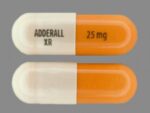
Small bodies react strongly to adult doses, and an accidental Adderall overdose in a toddler can happen fast. Poison Control describes common scenarios: a child gets a double dose of their own medicine because two caregivers each gave it, or a toddler swallows a sibling’s or parent’s pill. Brightly colored capsules can look like candy. Even a single higher-strength pill can cause harm in a young child.
People combining stimulants
Stacking Adderall with other stimulants adds to the load on the heart and nervous system. That includes other ADHD medications, cocaine, methamphetamine, some decongestants, and large amounts of caffeine from energy drinks, pre-workout powders, or caffeine pills.
People taking serotonergic medications
The FDA label warns that serotonin syndrome, a potentially life-threatening reaction, can occur with amphetamines, especially when combined with other drugs that raise serotonin. These include many antidepressants (SSRIs, SNRIs, tricyclics), triptans for migraine, tramadol, fentanyl, lithium, buspirone, and St. John’s wort. Symptoms include agitation, sweating, muscle twitching or rigidity, shivering, diarrhea, fever, and a fast heartbeat. Many people safely take an antidepressant with a stimulant under a doctor’s care, so don’t stop anything on your own. Just make sure every prescriber knows your full medication list.
Anyone on an MAOI
Adderall is contraindicated for people taking monoamine oxidase inhibitors (MAOIs) or within 14 days of stopping one. The combination can cause a dangerous spike in blood pressure. MAOIs include certain older antidepressants and the antibiotic linezolid.
People using pills from unverified sources
This is one of the biggest modern risks. The DEA has warned that criminal networks press fake pills designed to look like real prescription medications, including Adderall. These may contain methamphetamine, fentanyl, or both. A person who thinks they’re taking a stimulant can end up with an opioid overdose instead, which is why naloxone appears in the steps at the top of this page. Only take medication dispensed by a licensed, verifiable pharmacy.
People misusing for study, work, or parties
Taking Adderall without a prescription, taking extra, or using it in ways other than swallowing as directed sharply increases the chance of an overdose. Late nights, little food, alcohol, and dehydration make it worse. Students are a particularly affected group; our piece on Adderall misuse in college students looks at that pattern in depth.
People with heart conditions or high blood pressure
Existing heart disease, structural heart problems, rhythm disorders, or uncontrolled hypertension lower the margin of safety. Prescribers screen for these before starting a stimulant, but undiagnosed conditions exist.
Preventing an Adderall overdose at home
Most accidental stimulant poisonings are preventable. The FDA’s boxed warning itself tells prescribers to counsel families on safe storage and disposal. These habits help.
Lock it up
A locking medication box or a lockable drawer is inexpensive and works. Keep it out of sight and out of reach. Don’t store pills in purses, backpacks, or on nightstands where kids and visitors can find them. Teenagers sometimes share or sell their ADHD medication, and a lockbox reduces that temptation too.
Count pills and track doses
- Count pills when you pick up a refill and check periodically. Missing pills are an early sign of diversion or misuse.
- Use a dose log on the fridge or a shared phone note so two caregivers never give the same dose twice.
- A weekly pill organizer helps adults avoid accidentally taking a second dose on a distracted morning.
- Let only adults handle and give medication to young children, and avoid calling medicine “candy.”
Get rid of what you don’t need
Leftover Adderall after a dose change or the end of treatment is a risk sitting in a cabinet. The FDA’s drug disposal guidance recommends take-back options first: pharmacy drop-off kiosks, community collection events such as the DEA’s National Prescription Drug Take Back Day, or prepaid mail-back envelopes. If none is available and the drug isn’t on the FDA’s flush list, the FDA suggests mixing pills with something unappealing, like used coffee grounds or cat litter, sealing the mixture in a bag or container, and putting it in household trash. Scratch out personal information on the empty bottle before throwing it away.
Keep emergency numbers visible
Save Poison Control (1-800-222-1222) in every family member’s phone, and post it on the fridge for babysitters. If anyone in your household could be exposed to opioids, including through counterfeit pills, keep naloxone at home. It’s available over the counter at most pharmacies.
After an Adderall overdose
Getting through the emergency is the first step. What happens next matters a lot for preventing another one.
Follow up with a doctor
Even if the person was discharged quickly, schedule a follow-up with their primary care provider or prescriber. They may want to repeat kidney or heart tests, review the medication plan, and look at what led to the overdose. If it was accidental, they may adjust the formulation or dosing system. If the person had heart symptoms, a referral to a cardiologist may make sense.
Don’t stop or restart Adderall on your own afterward. Abrupt changes can bring on fatigue and low mood, and a sudden restart at the old dose may not be appropriate. Let the prescriber guide it.
Look honestly at misuse
An Adderall overdose is sometimes the first clear sign of a stimulant use problem. Warning signs include taking more than prescribed, running out early, using pills from friends or online sellers, needing more to feel the same effect, or continuing despite health or relationship problems. Treatment works, and it doesn’t have to start with a crisis.
The SAMHSA National Helpline at 1-800-662-4357 is free, confidential, and open 24 hours a day, every day of the year. It offers referrals to local treatment, support groups, and community organizations, in English and Spanish.
Address the emotional side
If the overdose was intentional, or if the person has been feeling hopeless, help is available right now. Call or text 988 to reach the 988 Suicide & Crisis Lifeline. Family members who witnessed the overdose may need support too. Shock, guilt, and anxiety are normal reactions, and talking to a counselor can help.
Make a plan for next time
- Move all stimulant medication into a locked box today.
- Dispose of any extra or outdated pills through a take-back program.
- Share a full medication list with every doctor and pharmacist.
- Keep naloxone on hand if any risk of counterfeit pills exists.
- Make sure everyone in the home knows when to call 911 and when to call Poison Control.
The single most useful thing to remember from this page is simple: when in doubt, call. Poison Control specialists would much rather hear from you about a false alarm than not hear from you at all.