Last reviewed October 2026 against FDA labeling and published research. This page explains a medical topic in general terms; decisions about your dose belong with your prescriber.
Adderall tolerance means your body responds less to the same dose than it used to, so the medication seems weaker or wears off sooner. The FDA label for Adderall states plainly that the drug “may produce tolerance.” That part isn’t controversial. What is less settled is how often true tolerance develops in people taking steady, prescribed doses for ADHD, how quickly it happens, and what to do about it.
Researchers generally separate two ideas. Acute tolerance (sometimes called tachyphylaxis) happens within a single day: the same blood level of a stimulant produces less effect in the afternoon than in the morning. This is well documented and is one reason extended-release products were designed to deliver rising levels across the day. Long-term tolerance, a gradual fading of benefit over months or years, is where the evidence gets mixed. A 2022 literature review in Brain Sciences found estimates ranging from under 3% to roughly a quarter of patients, depending on how the study defined tolerance and who was included. Some large trials found no drop-off at all. Others, including re-analyses of the long-running MTA study in children, suggest a meaningful share lose benefit over time.
So if your Adderall doesn’t feel like it used to, tolerance is one possibility. It’s rarely the only one. This guide helps you sort through the alternatives, track what’s happening, and walk into your next appointment with useful information.
Why might tolerance happen at all?
Adderall works by boosting dopamine and norepinephrine signaling in the brain. The brain is good at adapting to steady changes, and animal studies of long-term stimulant exposure show adjustments such as changes in dopamine transporters and reduced dopamine release. One brain-imaging study in adults found that dopamine transporter levels rose by about 24% after a year of methylphenidate treatment, yet the participants’ clinical response held steady over that year. That’s a good example of why biology alone doesn’t settle the question: the brain can change measurably without a person losing benefit.
It also helps to separate tolerance from two related terms. Dependence means your body has adapted so that stopping causes withdrawal symptoms. Addiction (stimulant use disorder) is a pattern of compulsive use despite harm. Tolerance can occur without either, and people taking prescribed doses as directed usually don’t develop addiction. But rising tolerance combined with self-escalation is one of the paths that can lead there.
Is it Adderall tolerance or something else?
When a medication that worked well starts to feel weaker, the first instinct is to blame the drug. In practice, clinicians often find something in the person’s life or routine has shifted. Use this table to look for patterns before assuming your body has adapted.
| Possible cause | Why it can mimic tolerance | Clues it might be this |
|---|---|---|
| Sleep debt | Stimulants can’t fully offset exhaustion; poor sleep worsens attention and mood on its own | You’re sleeping less than 7 hours, waking often, or taking your dose later than usual |
| Stress or burnout | High stress drains focus and motivation, and can make you feel the medication “isn’t doing anything” | A new job, exams, caregiving, conflict or grief started around the same time |
| Hormonal cycle | Some people report stimulants feel weaker at certain points in the menstrual cycle; research is limited but growing | The dip shows up at the same phase each month, often the week before a period |
| New medications or supplements | Some drugs change how amphetamine is absorbed or cleared, or add side effects that cloud focus | You recently started an antacid, antidepressant, sleep aid, allergy pill or supplement |
| Diet and acidity | Older Adderall labeling lists ascorbic acid (vitamin C) and fruit juices among agents that can lower amphetamine absorption | You take your dose with orange juice, a vitamin C supplement, or an acidic drink |
| Skipping meals | Low blood sugar and low energy can feel like the medication failing | You’re eating little before afternoon slumps |
| Depression or anxiety | Both affect concentration, energy and motivation; stimulants don’t treat them | Low mood, loss of interest, constant worry, or changes in appetite and sleep |
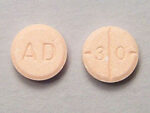
| Generic manufacturer switch | Generics must meet FDA standards, but different makers’ tablets can differ in inactive ingredients, and some people notice a difference | Your pills changed color, shape or imprint at your last refill |
| Life demands changed | A dose that covered a 6-hour school day may not cover a 10-hour workday or a heavier course load | Your schedule, responsibilities or hours got longer |
| Substance use | Alcohol, cannabis and heavy caffeine can all disrupt sleep and attention | Use has increased recently |
| Taking doses inconsistently | Missed or irregular doses make it hard to judge effect | Your timing varies day to day |
Notice how many of these are fixable without changing your dose at all. A pharmacist can quickly check whether a new medicine or supplement might be interfering. And if your pills changed appearance, tell your prescriber and pharmacist; with ongoing supply problems (see our article on the Adderall shortage), manufacturer switches have become more common.
Caffeine deserves a mention too. Heavy coffee or energy drink use doesn’t directly cause Adderall tolerance, but it can wreck sleep and increase jitteriness, which makes the medication feel less effective. Our guide on Adderall and caffeine covers that in more detail.
Self-check: signs of Adderall tolerance
Print this list or copy it into a notes app. Check off what applies over the past two to four weeks. It’s not a diagnostic test; it’s a way to describe your experience clearly.
Changes in how the medication works
- ☐ The same dose feels noticeably weaker than it did a few months ago
- ☐ It takes longer to “kick in” or the effect is harder to notice
- ☐ It wears off earlier in the day than it used to
- ☐ ADHD symptoms (distractibility, forgetfulness, restlessness, impulsivity) are creeping back during hours when the medication should be working
- ☐ Side effects you used to have, like reduced appetite, have faded along with the benefits
Changes in your behavior around the medication
- ☐ You feel tempted to take an extra dose or take it earlier than prescribed
- ☐ You’re running out before your refill date
- ☐ You’re leaning on more caffeine or energy drinks to get the same focus
- ☐ You think about the medication much more than you used to
Changes in your day-to-day life
- ☐ Work, school or home tasks are slipping again
- ☐ People around you have commented that you seem more scattered
- ☐ The afternoon or evening comedown feels harsher (see Adderall crash)
If you checked several boxes in the first group and few causes from the earlier table seem to apply, it’s reasonable to raise tolerance with your prescriber. If you checked any box in the second group, that’s especially worth bringing up, honestly and soon. Those patterns can be early signs that use is drifting toward misuse, and catching that early protects you.
How fast does Adderall tolerance develop?
There’s no fixed timeline. Within-day tolerance can show up on the very first day, which is why an afternoon dose sometimes feels weaker than the morning one even at similar blood levels. In children, one pharmacology study found a flat dosing pattern of methylphenidate lost about 40% of its effect by afternoon, and the effect appeared to reset overnight. Longer-term changes, when they happen, have been reported anywhere from a few weeks to more than a year into treatment. Many people stay on the same dose for years without any loss of benefit. If you notice a change in the first few weeks after starting, it’s more likely that the “honeymoon” side effects, like a strong appetite drop or a noticeable energy lift, are fading while the core benefit remains. That shift is normal and doesn’t usually mean the medicine has stopped working.
What not to do if you think you’ve built a tolerance
This section matters as much as any other. Adderall is a Schedule II controlled substance, and its FDA label carries a boxed warning: it has a high potential for abuse and misuse, which can lead to substance use disorder, including addiction, and misuse can cause overdose and death. The risk goes up as doses go up.
- Don’t raise your own dose. Taking an extra tablet “just this week” is how many people end up running out early, sleeping poorly and feeling worse. MedlinePlus is direct about this: don’t take more, more often, or for longer than prescribed.
- Don’t add someone else’s medication or buy pills online without a prescription. Counterfeit stimulants sold on social media and illegal websites have been found to contain methamphetamine and fentanyl.
- Don’t stack other stimulants such as energy drinks, pre-workouts or caffeine pills to make up the difference. They add strain on your heart without fixing the underlying issue.
- Don’t stop suddenly without a plan. Abruptly stopping after a long period of use can bring on fatigue, low mood and other symptoms. Our guide to Adderall withdrawal explains what to expect.
- Don’t change how you take it (crushing, chewing extended-release capsules, or any non-oral use). This raises the risk of serious harm and is a form of misuse.
Self-escalation is especially common in high-pressure settings like college, where stimulants are widely shared and the idea of “needing more” feels normal. Our article on Adderall misuse in college students looks at that pattern.
Feeling like your dose isn’t enough is a legitimate concern. The safe answer is a conversation with your prescriber, not a bigger handful of pills.
If you’re worried that your use has gotten out of control, the SAMHSA National Helpline is free, confidential and open 24/7 at 1-800-662-4357. If you feel hopeless or have thoughts of self-harm, call or text 988. For chest pain, fainting, seizures or other emergency symptoms, call 911.
Preparing for your appointment
A short appointment goes much further when you bring data instead of a general sense that “it’s not working.” Two weeks of simple notes can change the whole conversation.
A symptom log you can copy
Fill in one row per day. Use a 1–5 scale for focus (1 = very poor, 5 = excellent). Keep it quick; 60 seconds at bedtime is enough.
| Date | Dose and time taken | Hours slept | Focus AM (1–5) | Focus PM (1–5) | Time it wore off | Caffeine / alcohol | Meals (yes/no) | Stress level (1–5) | Side effects or notes |
|---|---|---|---|---|---|---|---|---|---|
| Example: Mon | 20 mg XR, 7:30 a.m. | 6 | 4 | 2 | 1:30 p.m. | 2 coffees | Breakfast no, lunch yes | 4 | Headache late afternoon |
Also jot down any of the following, since they help your prescriber rule out other causes:
- The date you first noticed a change
- Any new medications, supplements or vitamins
- Whether your pills changed appearance (a photo of the label helps)
- Changes in work hours, school load, caregiving or relationships
- Your menstrual cycle dates, if relevant
- Any mood changes, worry or loss of interest
- Home blood pressure or heart rate readings, if you track them
10 questions to ask your prescriber
- Based on my log, does this look more like tolerance, or like something else such as sleep, stress or mood?
- Could any of my other medications, supplements or eating habits be affecting how Adderall works?
- Is my current dose still within the usual range for my age and condition, and how much room is there to adjust safely?
- Would changing the time I take it, or splitting it into two doses, help with the early wear-off?
- Would switching between immediate-release and extended-release make sense for my schedule?
- Are planned breaks from the medication an option for me? What would they look like, and what are the downsides?
- Should I consider a different stimulant, like lisdexamfetamine or a methylphenidate product?
- Would adding a non-stimulant medication or therapy help me rely less on dose increases?
- Should I be screened for depression, anxiety or a sleep disorder?
- What signs should make me contact you before our next scheduled visit?
Be honest about any extra doses you’ve taken or any non-prescribed stimulant use. Prescribers hear this regularly, and it changes which options are safest. Hiding it can lead to a plan that doesn’t fit what’s really happening.
What your doctor may suggest
There’s no single protocol for Adderall tolerance. Guidelines say little about it; the 2022 Brain Sciences review found that among four major ADHD guidelines, only the Canadian one directly addressed tolerance, advising clinicians to re-evaluate treatment when doses keep rising or responses become atypical. In practice, prescribers usually work through options roughly in this order.
1. Address the non-medication causes first
If your log shows five hours of sleep a night, skipped breakfasts and a new high-stress job, your prescriber may suggest working on those before touching the dose. They may also screen for depression, anxiety or a sleep disorder such as sleep apnea, each of which can blunt the benefit of a stimulant.
2. Reassess the dose
Sometimes a dose increase really is the right call, particularly in teenagers who are still growing, or when someone started at a low dose and never reached their best level. Your prescriber will weigh benefits against side effects like raised blood pressure, heart rate, poor sleep and appetite loss, and will stay within labeled limits. For context on typical ranges, see our Adderall dosage chart.
That said, repeated increases are a red flag in their own right. Writing in Psychiatric Times in late 2025, researchers who re-examined MTA study data pointed out that average doses in the medication-only group rose by about 20% over the study while benefit still faded for many children. They cautioned that chasing tolerance with ever-higher doses can push people well past recommended maximums. Their interpretation is debated, and the authors disclosed industry ties, but the caution about open-ended escalation is widely shared.
3. Adjust timing
If the medication wears off earlier rather than feeling weaker overall, the fix may be timing. Options include taking the dose at a different time, adding a second smaller dose of immediate-release in the early afternoon, or adjusting when you eat relative to your dose. Avoiding acidic drinks or vitamin C right around your dose is a simple tweak your prescriber may mention.
4. Switch formulation
Moving between immediate-release and extended-release Adderall changes how the drug is released across the day. Extended-release products were developed partly to counter within-day acute tolerance by delivering rising levels. Some people do better on one than the other. Our comparison of Adderall IR vs Adderall XR explains the differences.
5. Planned medication breaks
Sometimes called “drug holidays,” these are scheduled pauses, such as weekends or school vacations, decided together with a prescriber. The idea is that time off may let the body reset and reduce tolerance, and it gives everyone a chance to see how symptoms look without medication. Breaks have also been used to limit appetite and growth effects in children.
The evidence has real limits, though. Studies of drug holidays are small and mostly in children, and they don’t clearly show that breaks prevent long-term tolerance. Downsides matter too: symptoms return during the break, which can affect driving safety, relationships, work and school. Some people feel tired or low when they stop. A break should never be improvised in the middle of a demanding week; it’s something to plan.
6. Switch stimulant class
Amphetamines (like Adderall and lisdexamfetamine) and methylphenidate work through overlapping but distinct mechanisms. When one family seems to lose effect, a trial of the other is a common strategy and is one of the approaches the 2022 review describes. Some people get a fresh response. Lisdexamfetamine is a related amphetamine with a smoother release profile that some find more consistent; see Vyvanse vs Adderall for how they compare. Not every expert agrees switching is always helpful, so this is a decision to make with someone who knows your history.
7. Add therapy or a non-stimulant
Medication isn’t the only ADHD tool. Cognitive behavioral therapy designed for ADHD, coaching, and practical systems like planners and timers can reduce how much work the medication has to do. Non-stimulant medicines, including atomoxetine, viloxazine, and extended-release guanfacine or clonidine, may be added to a stimulant or used instead. They usually take a few weeks to build to full effect. Combining approaches can sometimes allow a person to stay on a stable stimulant dose rather than repeatedly raising it.
8. Re-evaluate the bigger picture
ADHD symptoms naturally wax and wane over a lifetime. What looks like tolerance can sometimes be a change in the condition itself, or in what life is asking of you. A thorough check-in every so often, even when things seem fine, keeps treatment matched to where you are now.
Adderall tolerance in teens, adults and life transitions
The same complaint, “my Adderall isn’t working anymore,” can mean different things at different stages of life.
- Growing children and teens. A dose that fit a 60-pound child may simply be too small for the same person at 120 pounds. That’s not tolerance; it’s growth. School demands also climb sharply in middle and high school. Parents can help by sharing teacher feedback and report-card trends with the prescriber.
- College students and young adults. Longer days, irregular sleep, more alcohol and easy access to other people’s pills all make this a risky period. Feeling that a dose has “stopped working” during finals is common and is often about sleep and stress more than chemistry.
- New jobs and parenthood. Life transitions can stretch the hours you need coverage and cut the hours you sleep. A schedule change may solve more than a dose change.
- Perimenopause. Some adults notice ADHD symptoms worsen as hormone levels shift in midlife. This area is still being studied, but it’s worth mentioning to your clinician if the timing fits.
- Older adults and new health conditions. Blood pressure, heart conditions and other medications become more important with age, which can limit how much a dose can safely rise. That makes non-dose options especially valuable.
Whatever your age, the approach stays the same: notice the change, look for other explanations, keep a log, and talk to your prescriber rather than adjusting on your own.
Key points
- The FDA label confirms Adderall can cause tolerance, but research on long-term tolerance at prescribed ADHD doses is mixed, with estimates that vary widely.
- Within-day (acute) tolerance is well documented; months-to-years tolerance is less certain.
- Sleep, stress, hormones, diet, new medications, mood, generic switches and bigger life demands can all make Adderall feel weaker.
- Never raise your own dose or add other stimulants. Adderall carries a boxed warning for abuse, misuse and addiction.
- A two-week symptom log and a list of questions make your appointment far more productive.
- Options your prescriber may consider include addressing other causes, careful dose review, timing changes, switching formulations, planned breaks, a different stimulant class, and adding therapy or a non-stimulant.
- Help is available any time: SAMHSA at 1-800-662-4357, 988 for crisis support, 911 for emergencies.
Sources and further reading
- DailyMed: Adderall tablets prescribing information (boxed warning, dependence and tolerance)
- Handelman and Sumiya, Brain Sciences (2022): Tolerance to stimulant medication for ADHD
- Psychiatric Times: Tolerance to stimulant medications in children with ADHD
- FDA: Adderall labeling (2005), drug interactions with acidifying agents
- MedlinePlus: Dextroamphetamine and amphetamine