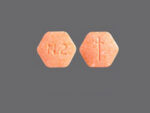
It is 2:40 a.m. and you are awake again, walking to the bathroom for the second time tonight. When you get there, the stream starts slowly, weakens, and stops, and you are left with the feeling that you did not finish. If that sounds familiar, you are in large company. Studies of older men estimate that more than half of men over 50 experience some urinary symptoms linked to an enlarged prostate, and the share rises with every decade.
For many of those men, the first surprise at the doctor’s office is that a medicine best known for erectile dysfunction is also approved for the prostate. Cialis (tadalafil) at 5 mg once daily is an FDA-approved treatment for the signs and symptoms of benign prostatic hyperplasia (BPH), whether or not a man also has erectile dysfunction. This guide explains how it works, what the research shows, how it compares with other BPH medicines, and who should not use it.
In brief: Daily tadalafil 5 mg relaxes smooth muscle in the prostate, bladder neck, and urethra and may improve blood flow and nerve signaling in the lower urinary tract. Clinical trials show meaningful improvement in urinary symptom scores, sometimes within a week and clearly by four weeks. It does not shrink the prostate, it does not significantly improve peak urine flow, and it cannot be taken with nitrates. Treatment should follow a proper evaluation by a clinician.
First, what is BPH?
Benign prostatic hyperplasia is a non-cancerous growth of the prostate, a walnut-sized gland that sits below the bladder and wraps around the urethra, the tube that carries urine out of the body. As the gland grows with age, it can squeeze the urethra and irritate the bladder. The bladder muscle thickens, becomes more sensitive, and does not empty fully.
BPH is not cancer and does not by itself raise the risk of prostate cancer. However, the symptoms can overlap with other conditions, including infection, bladder problems, diabetes, medication effects, and, rarely, cancer. That is why a medical evaluation matters before any treatment begins.
The symptoms doctors group together as LUTS
Clinicians use the term lower urinary tract symptoms, or LUTS, to describe the cluster of problems that BPH causes. They fall into two groups.
Storage symptoms (the bladder is irritated)
- Needing to urinate frequently during the day
- Sudden, strong urges that are hard to delay
- Waking at night to urinate (nocturia)
- Occasional leakage associated with urgency
Voiding symptoms (the flow is obstructed)
- Hesitancy, or difficulty starting the stream
- A weak or slow stream
- Stopping and starting during urination
- Straining
- A sense that the bladder has not emptied fully
- Dribbling at the end
Doctors often measure severity with the International Prostate Symptom Score (IPSS), a short questionnaire scored from 0 to 35. Scores of 8 to 19 are generally considered moderate, and 20 or higher is severe. When you read about trial results later in this article, a change of several points on that scale is what clinicians consider meaningful.
How can an ED medicine help the prostate?
The same chemical pathway that controls blood flow to the penis is active in the prostate, the bladder, and the urethra. Tadalafil blocks PDE5, an enzyme that breaks down cyclic GMP. When cyclic GMP stays higher, smooth muscle tends to relax. Researchers believe several effects may be at work in the lower urinary tract:
- Smooth-muscle relaxation in the prostate, bladder neck, and urethra, which may ease the squeeze on the urine channel.
- Improved blood flow to the pelvic organs, which may reduce tissue hypoxia associated with BPH.
- Effects on nerve signaling from the bladder, which may reduce urgency and the feeling of an overly sensitive bladder.
The exact mechanism is still being studied, which is one reason the evidence is expressed in symptom scores rather than a single clear biological explanation. What is well documented is the clinical result.
What the research shows
Symptom scores improve
In a 12-week randomized, double-blind trial in men aged 45 or older with BPH symptoms, tadalafil 5 mg once daily lowered the total IPSS by an average of about 5.6 points, versus about 3.6 points with placebo. The improvement was apparent after one week and statistically significant by week four. In an earlier, larger dose-finding trial of more than a thousand men, daily doses of 2.5 mg to 20 mg all reduced IPSS by roughly 4 to 5 points, and 5 mg offered the best balance of benefit and tolerability, which is why 5 mg became the approved dose.
The benefit is similar with or without ED
A pooled analysis published in BJU International looked at men who did not have erectile dysfunction. Tadalafil 5 mg still improved IPSS compared with placebo, and the size of the improvement was similar to that seen in men who did have ED. That finding supports using the medicine for urinary symptoms alone.
Meta-analyses agree, with modest effect sizes
A 2021 evidence-based analysis pooling randomized trials of 5 mg once daily found a statistically significant improvement over placebo in total IPSS, in both the voiding and storage subscores, and in quality-of-life measures. The average difference versus placebo was modest, about two points on the scale, which is part of why doctors describe tadalafil as helpful but not miraculous. The same analysis characterized the drug as well tolerated.
What it does not do
- It does not shrink the prostate.
- In the 12-week trial above, it did not significantly improve peak urine flow rate (Qmax) or reduce the volume of urine left in the bladder after voiding.
- It is not a treatment for prostate cancer and does not replace screening conversations.
- It does not prevent long-term BPH progression the way some other drugs may.
In practical terms, many men feel less urgency and fewer nighttime trips, even if the measured flow rate does not change much.
What taking it looks like
The dose
For BPH, the labeled dose is 5 mg once daily, taken at about the same time each day, with or without food. For men who have both BPH and erectile dysfunction, the same 5 mg daily dose is used. Higher doses are not recommended for daily use, and as-needed doses (10 mg or 20 mg) are not approved for BPH.
Adjustments for other conditions
- Kidney impairment: men with moderate kidney impairment may start at 2.5 mg with a possible increase to 5 mg. Daily use is not recommended in severe impairment.
- Liver impairment: severe liver disease generally calls for avoiding tadalafil, and mild to moderate cases need caution.
- Interacting drugs: strong CYP3A4 inhibitors such as ketoconazole or ritonavir can raise tadalafil levels, and daily dosing is limited to 2.5 mg in that setting.
A typical timeline
| When | What many men notice |
|---|---|
| Days 1 to 5 | Drug level is building to a steady state. Some men notice early improvement; others notice headache or indigestion first. |
| Weeks 1 to 2 | Early symptom relief can appear, such as fewer urgent trips. Side effects, if present, often begin to settle. |
| Week 4 | In trials, the improvement was statistically significant by this point. |
| Weeks 8 to 12 | Benefits typically continue to build. This is a common time for a follow-up visit. |
| Beyond 3 months | Longer extension studies have followed men for a year or more and found benefits maintained. |
Stopping the daily tablet usually means symptoms gradually return, because the effect depends on regular dosing. If you are weighing daily versus as-needed use, our guide to daily Cialis vs as-needed Cialis explains why BPH uses the daily format.
How Cialis compares with other BPH treatments
| Treatment | How it works | Speed | Shrinks prostate? | Sexual side effects |
|---|---|---|---|---|
| Tadalafil 5 mg daily | Relaxes smooth muscle, may improve blood flow and nerve signaling | Days to weeks | No | Treats ED; can cause headache, flushing, indigestion |
| Alpha-blockers (tamsulosin, alfuzosin, silodosin) | Relax muscle in prostate and bladder neck | Days | No | Possible ejaculation changes; dizziness |
| 5-alpha reductase inhibitors (finasteride, dutasteride) | Reduce prostate size by lowering hormone activity | Months | Yes | May reduce libido or cause ED in some men |
| Combination therapy | Combines mechanisms | Varies | Depends | Depends |
| Procedures and surgery | Remove or reduce obstructing tissue | Varies | Removes tissue | Varies by procedure |
When is tadalafil a particularly good fit?
- A man who has both bothersome urinary symptoms and erectile dysfunction, and who would otherwise take two medicines.
- A man who is concerned about the sexual side effects of 5-alpha reductase inhibitors or about ejaculation changes with some alpha-blockers.
- A man whose prostate is not very large and whose symptoms are mainly irritative.
When might something else be better?
- A man with a very large prostate, for whom a 5-alpha reductase inhibitor can reduce size and the risk of complications.
- A man who takes nitrates for heart disease. Tadalafil is not an option.
- A man who needs rapid, strong improvement in urine flow or who has significant retention. A urologist may favor an alpha-blocker or a procedure.
Combining tadalafil with tamsulosin
Some trials have studied tadalafil 5 mg together with tamsulosin 0.4 mg, and meta-analyses suggest the combination can improve symptoms somewhat more than tamsulosin alone. Because both drugs lower blood pressure, the U.S. label advises caution when PDE5 inhibitors are used with alpha-blockers and says patients should be stable on the alpha-blocker before starting a PDE5 inhibitor, usually at the lowest dose. Combination therapy is therefore a decision for a urologist or primary-care clinician who can check your blood pressure and monitor for dizziness. Do not combine them on your own, and never combine with doxazosin or other alpha-blockers without direction.
Side effects specific to BPH treatment
The side effects of 5 mg daily tadalafil are generally similar to those seen in erectile dysfunction treatment. In the 12-week European Urology trial, the most commonly reported were headache and back pain, each affecting only a small percentage of men. Others include:
- Indigestion or heartburn
- Muscle aches
- Flushing
- Stuffy nose
- Dizziness, particularly when standing
Rare but serious problems include an erection lasting more than four hours, sudden vision loss in one eye, sudden hearing loss, and fainting. Seek emergency care for any of these. For a longer discussion of how long effects and side effects last, see How long does Cialis last?.
Safety rules that matter for men with BPH
No nitrates
Men with BPH are often older and may also have heart disease. If you use nitroglycerin or any long-acting nitrate, tadalafil is contraindicated. Read the full guide to Cialis and nitrates.
Blood pressure matters
Many men with BPH also have high blood pressure. Tadalafil can lower blood pressure slightly, and it is often compatible with blood-pressure medicines, but monitoring is important. See Cialis and blood pressure.
Alcohol in moderation
Alcohol increases nighttime urination for many men and adds to the blood-pressure-lowering effect of tadalafil. Keeping intake modest is wise; our guide to Cialis and alcohol goes into limits.
Other medicines that worsen BPH symptoms
Some over-the-counter decongestants (such as pseudoephedrine) and certain antihistamines can tighten the bladder outlet or weaken the bladder and make urinary symptoms worse. Diuretics increase urine output. Ask a pharmacist to review everything you take.
Lifestyle steps that work alongside medication
- Taper evening fluids. Drink more earlier in the day and less in the two to three hours before bed.
- Limit caffeine and alcohol, especially in the afternoon and evening.
- Try double voiding. After urinating, wait a few moments and try again to empty more fully.
- Stay active. Regular physical activity is associated with fewer urinary symptoms.
- Manage weight and blood sugar. Obesity and diabetes can worsen LUTS.
- Do not hold urine for long periods.
- Treat constipation, which can press on the bladder outlet.
Red flags: do not self-treat these
Seek prompt medical care if you have:
- Blood in the urine
- Complete inability to urinate
- Fever or chills with urinary symptoms or pain
- Pain in the lower abdomen, back, or genitals
- Unintentional weight loss or bone pain
- Recurrent urinary tract infections
Complete retention is an emergency. These signs can indicate infection, stones, kidney problems, or other conditions that need evaluation.
What a proper evaluation looks like
Before starting tadalafil for BPH, a clinician usually reviews your symptoms and medical history, asks you to complete the IPSS questionnaire, and examines your abdomen and prostate. Common tests include a urine test to check for infection or blood, and sometimes a blood test for kidney function. A PSA test may be discussed as part of shared decision-making about prostate cancer screening. Some men are asked to keep a bladder diary for a few days, recording how much they drink and how often and how much they urinate. A specialist referral to a urologist is common if symptoms are severe, if there are complications, or if medicines are not helping.
Follow-up: how you and your doctor know it is working
Because BPH symptoms are subjective, the most useful measure is the one you already know: how you feel. A good follow-up visit usually includes a few concrete checks.
- Repeat the symptom questionnaire. Comparing your IPSS before and after treatment shows whether the change is meaningful. A drop of three or more points is commonly viewed as noticeable.
- Count nighttime trips. Going from three trips to one is a real improvement even if your questionnaire total moves modestly.
- Review side effects. Headache, back ache, or indigestion that persists beyond the first few weeks deserves discussion.
- Check blood pressure, sitting and standing, especially if you also take other blood-pressure medicines or an alpha-blocker.
- Consider repeat urine tests or an ultrasound to measure how fully you empty your bladder if symptoms are severe or changing.
If you have given the medicine a fair trial, usually around 8 to 12 weeks, and the benefit is small, that is useful information. It does not mean you did anything wrong. Some men respond better to an alpha-blocker, a 5-alpha reductase inhibitor, a combination, or a procedure.
Planned pauses and surgery
If you are scheduled for a procedure or surgery, let the team know you take tadalafil. They may adjust timing around anesthesia and will want to avoid nitrates for at least 48 hours after your last dose.
What about saw palmetto and other supplements?
Herbal products such as saw palmetto, beta-sitosterol, and pygeum are widely marketed for prostate health. Large, well-designed trials of saw palmetto have generally not shown a clear advantage over placebo for urinary symptoms, and supplements are not regulated like prescription drugs, so ingredient quantities vary. Some products may interact with medicines or contain unlisted ingredients. If you want to try a supplement, tell your doctor first, particularly if you take blood thinners or blood-pressure medicines, and do not use a supplement as a reason to delay evaluation of worsening symptoms. Men who take tadalafil should be especially wary of “male enhancement” products, which have been found to contain hidden PDE5 inhibitors that could duplicate the drug and raise the risk of side effects.
Questions to bring to your appointment
- Are my symptoms consistent with BPH, or could something else be causing them?
- Is tadalafil appropriate with my other medicines and heart health?
- Would an alpha-blocker, a 5-alpha reductase inhibitor, or a combination fit me better?
- How will we measure whether it is working, and when?
- What should I do if I need nitroglycerin for chest pain?
- Is the generic version suitable, and how will my insurance handle it?
Frequently asked questions
Can I drink alcohol while taking tadalafil for BPH?
Modest amounts are generally acceptable for healthy men, but alcohol can increase nighttime urination and adds to tadalafil’s blood-pressure-lowering effect. If you notice more nocturia on nights when you drink, trimming evening alcohol often helps your urinary symptoms as much as the tablet does.
Should I stop tadalafil before a PSA test?
Tadalafil is not known to affect PSA results in a clinically meaningful way, so there is usually no need to stop it. Still, tell the clinician interpreting your result about every medicine you take.
Can I take Cialis for BPH if I do not have erectile dysfunction?
Yes. The 5 mg once-daily dose is approved for BPH symptoms regardless of whether ED is present, and trials in men without ED showed benefit.
How long before Cialis helps my urinary symptoms?
Some men notice improvement within one to two weeks, and in trials the difference from placebo was statistically significant by four weeks. Many clinicians reassess at around 8 to 12 weeks.
Will Cialis shrink my prostate?
No. It improves symptoms but does not reduce prostate size. If a large prostate is the concern, your doctor may discuss other medicines.
Can I take tadalafil on an as-needed basis for BPH?
Not for BPH. The approved BPH regimen is 5 mg once daily. As-needed 10 mg and 20 mg tablets are intended for erectile dysfunction.
Is generic tadalafil okay for BPH?
Generic tadalafil contains the same active ingredient and must meet FDA standards for equivalence. See Generic Cialis (tadalafil) for details.
Is it safe to take Cialis for BPH long term?
Studies lasting a year or longer have found a consistent safety profile, but long-term use still requires periodic review of your blood pressure, medicines, and symptoms.
Does tadalafil lower PSA?
Tadalafil is not known to meaningfully change PSA the way 5-alpha reductase inhibitors do. Let your clinician know which medicines you take whenever PSA results are interpreted.
The takeaway
For the right man, a single 5 mg tablet each day can ease both urinary symptoms and erectile difficulties, with a side-effect profile that most men find manageable. It is not a cure, it does not shrink the prostate, and it is off the table if you use nitrates. The best results come when it is chosen after a proper evaluation, taken consistently, and paired with simple habits like cutting back on evening fluids and caffeine.
Medical disclaimer: This article is for general education only and is not medical advice. Urinary symptoms can have many causes, and treatment should be based on a clinical evaluation. For more on BPH, see the NIDDK guide to prostate enlargement and the MedlinePlus tadalafil page.