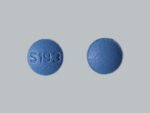
Antibiotic dosing is not guesswork, and clindamycin is a good example. The dose that suits a mild skin infection is not the same as for a severe bone infection. A child’s dose depends on weight. The way you space doses through the day matters, and so does what you do if you forget one.
This guide is organized as a practical reference card. We cover the capsule and liquid strengths, the dosing ranges that appear on the label, how to take each dose, how to fit it around your day, what to do when you miss one and how doses change for special groups. It is general information, not a prescription. Your own dose must come from your prescriber and your pharmacy label.
Quick answer: Oral clindamycin capsules come in 75 mg, 150 mg and 300 mg strengths. Labeled adult doses generally range from 150 to 450 mg every six hours, depending on the severity of the infection, and children’s doses are weight-based. If you miss a dose, take it when you remember unless the next dose is close, and never double up. Always follow your prescriber’s directions.
In This Article
- Strengths and Forms You May See
- Adult Dosing: What the Label Describes
- Children’s Dosing: Weight Matters
- How to Read Your Pharmacy Label
- Ten Common Dosing Mistakes
- How the Dose Fits Different Infections
- Your Pre-Start Checklist
- How to Take Each Dose
- Timing Doses Around Your Day
- What to Do If You Miss a Dose
- How Long Should You Take It?
- Dosing in Special Groups
- Topical and Vaginal Clindamycin: Dosing Basics
- Drug Interactions That Matter for Dosing
- Signs You May Need a Dose Review
- Practical Tools for Staying on Schedule
- Storage and Safety
- Frequently Asked Questions
- The Bottom Line
- Sources and Further Reading
Strengths and Forms You May See
| Form | Common strengths | Used for |
|---|---|---|
| Oral capsules | 75 mg, 150 mg, 300 mg | Adults and older children who can swallow capsules |
| Oral solution (granules for reconstitution) | 75 mg per 5 mL | Young children and anyone who cannot swallow capsules |
| Injection or IV infusion | Varied | Hospital and clinic use for more serious infections |
| Topical gel, lotion, solution or foam | 1% | Acne |
| Vaginal cream or ovules | 2% cream, 100 mg ovules | Bacterial vaginosis |
Capsules often have a larger strength than people expect. A “300 mg” capsule is simply one of the standard strengths, and your dose might be one capsule, two 150 mg capsules or a different combination. Always check the strength printed on the label so you know how many capsules make up one dose.
For what the antibiotic is used for, see clindamycin uses.
Adult Dosing: What the Label Describes
Product labeling for oral clindamycin in adults generally describes ranges instead of one fixed dose.
| Severity | Typical labeled adult range for oral clindamycin | Frequency |
|---|---|---|
| Serious infections | 150 to 300 mg | Every 6 hours |
| More severe infections | 300 to 450 mg | Every 6 hours |
The label specifies that the dose and duration should be determined by the severity of the infection, the site and the patient’s response, and that for certain infections caused by beta-hemolytic streptococci, treatment should continue for at least 10 days. Many other uses involve shorter courses, set by the prescriber.
In practice, clinicians often tailor schedules. For example, dental or skin infections may be treated with a shorter course, and some regimens divide the total daily amount into three doses rather than four. These are the decisions your prescriber makes, so do not change the schedule on your own.
Injectable doses for adults in the hospital are higher and are measured as a total daily amount divided into two to four doses, with the specific amount chosen according to the infection. This is managed by the care team.
Children’s Dosing: Weight Matters
Children’s doses are calculated from body weight. The oral solution is measured in milliliters, which is why it matters to use an oral syringe or dosing cup from the pharmacy.
- Pediatric labeling describes doses expressed in milligrams per kilogram of body weight per day, divided into three or four doses.
- Higher amounts per kilogram are used for more severe infections.
- Children who weigh enough to receive adult amounts are generally dosed like adults, but the prescriber decides.
- Doses for newborns and very young infants require special care and monitoring.
How the math works (an illustration only)
Pharmacists and prescribers use a simple calculation. Oral pediatric labeling for clindamycin describes ranges that increase with the severity of the infection, for example roughly 8 to 12 mg per kilogram per day for serious infections, with higher ranges for severe infections, all divided into three or four equal doses.
Take a child who weighs 20 kilograms (about 44 pounds):
- At 8 to 12 mg/kg/day, the daily total would be about 160 to 240 mg.
- Divided into three doses, that is roughly 53 to 80 mg per dose.
- With a solution that contains 75 mg in each 5 mL, a dose near 75 mg would be about 5 mL.
This example only shows how weight changes the amount. It is not a dosing recommendation. The prescriber selects the actual dose, rounds it to a measurable volume and writes it on the label. If the volume on your child’s label looks different from what you expected, ask the pharmacist to explain rather than adjusting it yourself.
Practical tips for parents:
- Check the concentration on the bottle (for example, 75 mg per 5 mL). Pharmacies may dispense different strengths, so do not assume it is the same as last time.
- Use the measuring tool provided, not a kitchen spoon.
- Write down the dose in milliliters with the times, and keep the note on the refrigerator.
- Keep the bottle capped and stored as directed. The liquid has a limited shelf life after mixing, which the label states. Do not use it past that date.
- Do not mix the medicine with a full bottle of milk or juice unless the pharmacist agrees, because a child who does not finish it will miss part of the dose.
- Call the pediatrician if your child refuses the medicine, vomits within a short time of taking it, or develops watery diarrhea.
How to Read Your Pharmacy Label
The label on your clindamycin bottle contains the most important dosing information you have. Take a minute to read each line.
- Patient name and date. Confirm they are correct, especially for children and when picking up for family members.
- Drug name and strength. For example, “clindamycin 300 mg capsule.” Check whether it is capsules, solution or something else.
- Directions. Look for the number of capsules or milliliters per dose, how many times a day, and the duration or “until finished” instruction.
- Quantity dispensed. Divide the quantity by the doses per day to see how many days the supply covers, and check that it matches what you were told.
- Refills. Antibiotic courses usually do not have refills, and a refill should prompt a conversation with the prescriber.
- Auxiliary stickers. Look for notes like “take with a full glass of water” or “discard after 14 days.”
- Expiry or discard date. Particularly important for mixed liquids.
- Pharmacy phone number. Keep it handy for questions.
If anything on the label differs from what the prescriber told you, call the pharmacy before taking the first dose. It is far easier to fix a discrepancy at the start than to guess later.
Ten Common Dosing Mistakes
| Mistake | Why it matters | A better approach |
|---|---|---|
| Stopping when you feel better | The infection may not be fully cleared | Complete the course unless your prescriber says otherwise |
| Doubling a missed dose | Raises side effects, including diarrhea | Skip it or take it late as advised; never double |
| Taking capsules dry | Can irritate or injure the esophagus | Always take with a full glass of water and stay upright |
| Using kitchen spoons for liquid | Spoons vary widely | Use the oral syringe or dosing cup provided |
| Giving adult capsules to a child | Weight-based dosing differs | Use the pediatric solution or a prescribed dose |
| Saving leftovers for later | Incomplete treatment and no clinician review | Return unused medicine to a take-back program |
| Taking someone else’s antibiotic | Wrong drug or dose, and risk of C. diff | Never share prescriptions |
| Not spacing doses evenly | Lower or uneven drug levels | Use alarms and consistent times |
| Mixing the solution incorrectly | Wrong concentration | Have the pharmacist prepare it, or follow the instructions exactly |
| Ignoring diarrhea | Could be C. diff | Call early; see side effects and C. diff risk |
How the Dose Fits Different Infections
These are general patterns, not prescriptions.
| Infection type | What affects the dose and duration |
|---|---|
| Mild to moderate skin infection | Size and depth of infection, whether it has been drained, allergy history |
| Dental infection | Spread of infection, whether dental treatment has occurred, penicillin allergy status |
| Bone or joint infection | Often higher doses and long courses, sometimes starting with IV therapy |
| Pelvic or abdominal infection | Usually part of a combination regimen in clinical settings |
| Strep throat or tonsillitis in penicillin allergy | Often a 10-day course for strep to prevent complications |
| Bacterial vaginosis | Local forms use fixed amounts over a few days |
| Acne | Topical form once or twice daily over weeks to months, combined with other treatments |
If your infection is not on the list or your plan looks different from what you read here, that does not mean something is wrong. Individual plans vary, and your prescriber has details that a general article cannot.
Your Pre-Start Checklist
Before you take the first dose, make sure you can answer these questions. If you cannot, call the pharmacy or prescriber. Taking five minutes now prevents most of the confusion that happens on day three, when you are tired, still unwell and trying to remember what the instructions said. It also helps to take a photo of the label with your phone so that you can check the details at any hour, including at night when the pharmacy is closed.
- What is the exact strength on my capsule or solution?
- How many capsules or milliliters make one dose?
- How many doses per day, and at what times?
- How many days should I take it?
- Should I take it with food or without?
- What should I do if I miss a dose?
- Which side effects should make me call?
- When is my follow-up?
How to Take Each Dose
- With a full glass of water. Clindamycin capsules can irritate the esophagus if they get stuck. Drinking plenty of water helps them travel down.
- Sit or stand upright for at least 30 minutes afterward. Avoid taking a dose right before lying down.
- With or without food. Food does not meaningfully reduce clindamycin absorption, and taking it with a meal can help if your stomach gets upset. Follow your label if it says anything specific.
- Swallow capsules whole. Do not open, crush or chew them unless a pharmacist tells you to.
- Use the solution as directed. Do not refrigerate the reconstituted oral solution unless the label says so, because it can thicken and become hard to pour.
- Keep to a regular schedule. An even spacing keeps the antibiotic level steady.
Timing Doses Around Your Day
For an every-six-hours schedule, you would ideally take doses at about 6 am, noon, 6 pm and midnight. In reality, most people prefer a schedule that does not wake them up. Ask your pharmacist or prescriber what is acceptable.
| Schedule | Example times | Notes |
|---|---|---|
| Four times daily | 7 am, 1 pm, 7 pm, 1 am | The “round the clock” approach. Many patients choose a bedtime and wake-up dose that are as close to evenly spaced as possible |
| Four times daily (waking hours) | 7 am, 12 pm, 5 pm, 10 pm | Common when a prescriber says “four times a day” rather than “every 6 hours” |
| Three times daily | 7 am, 3 pm, 11 pm, or 8 am, 2 pm, 10 pm | Used for some regimens |
If the label says “every 6 hours,” ask whether you need to wake up overnight. For many infections, prescribers accept evenly spaced doses during the waking day, but this is the prescriber’s decision. Setting phone alarms is the simplest way to avoid missed doses.
What to Do If You Miss a Dose
This is a common and reasonable worry. General guidance:
- If you remember soon after the missed time, take the dose as soon as you remember.
- If it is almost time for the next dose, skip the missed one and continue with the regular schedule.
- Never take two doses together to catch up. This can raise the risk of side effects such as stomach upset and diarrhea.
- Keep going. Missing one dose does not mean you must restart.
- Call your pharmacist or prescriber if you miss several doses, if you are unsure what to do or if your symptoms worsen.
If you miss a lot of doses, the infection may not clear properly and bacteria can develop resistance. For a comparison with another antibiotic’s missed-dose guidance, see what to do about a missed dose of amoxicillin.
How Long Should You Take It?
Duration depends on the infection.
- Skin and soft tissue infections: Often about 5 to 10 days.
- Dental infections: Often a short course, reassessed after a few days. See clindamycin for tooth infections.
- Bone and joint infections: Weeks, sometimes longer, with specialist guidance.
- Strep infections: The label notes treatment for at least 10 days for beta-hemolytic strep.
- Pelvic and abdominal infections: Variable.
- Bacterial vaginosis (vaginal forms): Often a few days to a week.
Do not stop early just because you feel better, unless your prescriber tells you. Likewise, do not extend the course on your own. If you finish and still have symptoms, call the clinic.
Dosing in Special Groups
Older adults
No automatic dose change is required just for age, but older adults have a higher risk of C. diff, and kidney and liver function may be reduced. Prescribers monitor closely.
Kidney disease
Clindamycin is mostly cleared by the liver, so many people with kidney disease do not need a large adjustment, but prescribers still consider the overall picture.
Liver disease
People with significant liver disease may clear clindamycin more slowly, and prescribers may adjust the dose or monitor liver tests.
Pregnancy and breastfeeding
Clindamycin is used in pregnancy when needed. Small amounts pass into breast milk, and the infant should be watched for diarrhea and thrush. Dosing is the same as for non-pregnant adults unless the prescriber decides otherwise.
People with obesity
Dosing may sometimes be adjusted, particularly for IV use. This is a decision for the clinical team.
Topical and Vaginal Clindamycin: Dosing Basics
Topical (acne): Apply a thin layer once or twice daily to affected areas, as directed. See topical clindamycin for acne.
Vaginal cream: Commonly used once daily at bedtime for several days. The applicator is filled to a marked line. Read the leaflet, and note the condom warning.
Vaginal ovules (suppositories): Typically inserted once daily at bedtime for three days. Follow the pharmacist’s instructions.
Do not use oral clindamycin leftovers for topical purposes or vice versa.
Drug Interactions That Matter for Dosing
- Erythromycin: May antagonize clindamycin. They are generally not used together.
- Neuromuscular blockers: Clindamycin may enhance their effect, important before surgery.
- Strong CYP3A4 inducers (rifampin, some seizure medicines): May lower clindamycin levels.
- Strong CYP3A4 inhibitors (some antifungals, certain HIV medicines): May raise levels.
- Warfarin and other blood thinners: Some antibiotics change bleeding risk, so extra monitoring may be wise.
- Anti-diarrheal drugs: Avoid unless your clinician approves, because of the C. diff concern.
Always tell your prescriber and pharmacist about everything you take. For side effects tied to the dose, see clindamycin side effects and C. diff risk.
Signs You May Need a Dose Review
Call your prescriber or pharmacist if:
- You cannot swallow the capsules or you vomit soon after a dose
- You miss multiple doses
- You develop watery diarrhea, a rash or swallowing pain
- Symptoms are not improving after two to three days
- Symptoms worsen at any point
- You are not sure whether the dose on the label matches what you were told
Practical Tools for Staying on Schedule
- Phone alarms, labeled with the medicine name.
- A pill organizer with four daily slots.
- A paper log where you tick off each dose.
- Link doses to routines: breakfast, lunch, dinner and bedtime.
- Ask for a smaller bottle if you travel, and pack extra capsules in your carry-on bag.
- Set a refill reminder if the course is long.
- Share the schedule with a family member who can help children or older adults.
Storage and Safety
- Store capsules at room temperature, away from heat and moisture.
- Keep the oral solution as directed after mixing and discard it after the labeled period.
- Keep medicines out of reach of children and pets.
- Do not share antibiotics, and do not save leftovers.
- Return unused medicine through a pharmacy take-back program when possible.
Frequently Asked Questions
What is the usual dose of clindamycin for adults?
Labeled oral doses generally range from 150 to 450 mg every six hours, depending on the infection. Your prescriber chooses the exact amount.
Is clindamycin 300 mg strong?
300 mg is a standard capsule strength. Whether it is appropriate depends on your infection, so follow your prescription.
Can I take clindamycin twice a day?
Only if your prescriber tells you to. The usual schedules are three or four times daily.
Should I take clindamycin with food?
It can be taken with or without food. Food may reduce stomach upset. Always drink a full glass of water with capsules.
What if I miss a dose of clindamycin?
Take it when you remember unless the next dose is near. Do not double up.
How long does clindamycin stay in your system?
Its half-life is a few hours in healthy adults, though it can be longer in people with liver problems or in older adults. Effects on gut bacteria can last longer, which is why C. diff can occur after finishing.
Can I take clindamycin with ibuprofen or acetaminophen?
These are commonly used together for pain with infections, but ask your pharmacist about your situation.
Can children take clindamycin capsules?
Older children who can swallow capsules may take them, but dosing is weight-based. Ask the pediatrician.
The Bottom Line
Clindamycin dosing is flexible by design. Capsules come in 75, 150 and 300 mg, adult labeled doses range from 150 to 450 mg every six hours, and children’s doses depend on weight. What matters most is following your prescriber’s plan, taking each dose with plenty of water, spacing doses evenly, never doubling up and calling early if diarrhea or other problems appear.
For more antibiotic guidance, explore our health tips library or contact us.
Sources and Further Reading
Medical disclaimer: This article is for general education and does not replace advice from a doctor, pharmacist or other qualified health professional. Do not change your dose or schedule without asking your prescriber. Dosing varies by infection, age, weight and health.