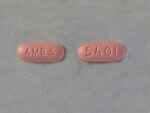
Fact-checked against current FDA prescribing information and safety communications. Updated October 2026. This guide explains how two sleep medicines differ; it does not replace advice from the clinician who knows your health history.
Here is the Ambien vs Lunesta question in one scene. Two people go to bed at the same hour. One swallows a zolpidem tablet (brand name Ambien). The other takes eszopiclone (brand name Lunesta). Both pills belong to the same family, the so-called Z-drugs, and both quiet the brain through the same receptor system. Yet by 3 a.m. the two people are in very different places chemically, and by 7 a.m. the difference can matter for whether one of them should be driving. That is the heart of the comparison: not which pill is “stronger,” but how long each one stays on duty and what that means for your particular kind of sleeplessness.
This guide follows one night on the clock first, then steps back to compare the drugs’ origins, label details, side effects, research record, switching considerations and cost.
- One night on the clock
- Molecule to market
- The master spec table
- Which sleep problem fits which drug
- Side-effect personalities
- Evidence: what head-to-head data and meta-analyses show
- Switching from one to the other
- Cost
- FAQ
One night on the clock: Ambien vs Lunesta from 10 p.m. to 7 a.m.
The times below are illustrations built from the pharmacokinetic averages printed in each drug’s labeling. Real bodies vary. Age, sex, liver health, other medicines and what you ate for dinner all shift the curve. Still, walking the clock is the clearest way to see why these two drugs behave differently.
10:00 p.m. — Dinner is over, and timing already matters
Both labels warn that food slows things down. For eszopiclone, the FDA label reports that a high-fat meal cut peak blood levels by about 21% and delayed the peak by roughly an hour, though total exposure stayed the same. Zolpidem’s labeling also says it works faster on an empty stomach. So a late, heavy meal can make either pill feel weaker at first, which tempts some people to take a second dose. That is exactly the wrong move. An empty-ish stomach is part of the plan, not a trick.
10:30 p.m. — Lights out, pill taken
Both drugs are meant to be taken immediately before bed, and both labels require at least 7 to 8 hours left before you need to be up and active. Our sleepers plan to rise at 6:30 or 7:00, so they clear that bar. Lunesta’s label also allows the dose to be taken after you have gone to bed and failed to fall asleep, according to MedlinePlus, but only if the full 7 to 8 hours still remain.
11:00 p.m. to midnight — The peak
Eszopiclone reaches its peak blood level in about one hour, so the Lunesta sleeper hits the top of the curve around 11:30. Immediate-release zolpidem peaks a little later on average, at about 1.6 hours according to StatPearls, which puts the Ambien sleeper near the top around midnight. In practice, most people taking either drug feel drowsy well before the peak. This is the window when falling asleep should happen, and it is also the window when getting out of bed carries the most risk of confusion, falls or a complex sleep behavior.
2:30 a.m. — The paths split
Here is where the comparison gets interesting. Zolpidem’s average elimination half-life is about 2.5 hours (range roughly 1.4 to 3.8 hours at the 10 mg dose). By 2:30 a.m., the Ambien sleeper’s blood level has already dropped by around half from its peak, and it keeps falling. For someone whose only problem is getting to sleep, that is ideal: the drug does its job at the start of the night and steps aside.
Eszopiclone’s half-life is about 6 hours in younger adults and about 9 hours in adults 65 and older. At 2:30 a.m., the Lunesta sleeper still has most of the dose on board. If this person tends to jolt awake at 3 a.m. and stare at the ceiling, that lingering level is the point. Lunesta’s label states it improves both sleep latency (how fast you fall asleep) and sleep maintenance (how well you stay asleep).
4:00 a.m. — The “3 a.m. waker” test
Imagine both sleepers wake briefly. The Ambien sleeper on immediate-release zolpidem has comparatively little drug left, which is why people with middle-of-the-night awakenings often say regular Ambien “wears off too early.” That gap is the reason Ambien CR, the extended-release version, exists. If you want that comparison, our guide to Ambien vs Ambien CR walks through it. The Lunesta sleeper is more likely to drift back off, because the drug is still meaningfully present.
6:30 to 7:00 a.m. — The alarm, and the hangover question
The Ambien sleeper usually has low levels by now, though the FDA has warned that some people, women in particular, can still have enough zolpidem in their blood to impair driving the next morning. That finding drove the 2013 change that lowered the recommended starting dose for women. Our separate article on how long Ambien stays in your system covers that clearance story in detail.
The Lunesta sleeper still has roughly half the peak level in circulation at wake-up time. That longer tail is the trade-off for better maintenance. In a study cited by the FDA, healthy adults given 3 mg of eszopiclone showed impaired driving-related skills and memory the next morning. The impairment was most severe at 7.5 hours after the dose and could still be clinically meaningful at 11.5 hours. Many of the volunteers did not feel impaired. That is the uncomfortable lesson of the morning in any Ambien vs Lunesta comparison: feeling awake is not proof of being unimpaired.
The night in one sentence: zolpidem is a sprinter that covers the first part of the night, while eszopiclone is a middle-distance runner that covers more of it and can still be in your system when the alarm goes off.
Molecule to market: where each Z-drug came from
The “Z” nickname is shorthand for zolpidem, zaleplon and zopiclone (plus eszopiclone). They are not benzodiazepines in structure, but they act on the same GABA-A receptor complex that benzodiazepines use, which is why they calm the brain and why they share some of the same risks.
Zolpidem: the 1992 workhorse
Zolpidem is an imidazopyridine compound. Its US labeling lists an initial approval in 1992, and for years Ambien was close to synonymous with “sleeping pill” in American pop culture. The original tablet was approved for short-term treatment of insomnia marked by trouble falling asleep. Later products reworked the same molecule: the extended-release Ambien CR, a sublingual tablet (Edluar), an oral spray, and a low-dose sublingual tablet for middle-of-the-night waking. MedlinePlus still lists those formulations, though not every brand is still marketed.
Eszopiclone: a mirror-image refinement
Zopiclone, a cyclopyrrolone, was sold in many countries for decades but never approved in the US. Molecules like zopiclone come in two mirror-image forms. Eszopiclone is the S-enantiomer, the active “hand” of the pair. Sepracor brought it to market as Lunesta, and FDA records list its first approval in December 2004. One notable difference from the original Ambien label: Lunesta’s indication is simply “treatment of insomnia,” without the “short-term” qualifier, and its clinical program included trials as long as six months.
That labeling difference is often over-read. It does not mean Lunesta is “safe forever” or that Ambien must stop after a month. It means the two companies ran different studies and the FDA approved the wording those studies supported. Professional guidelines, discussed below, still favor non-drug treatment first and the shortest effective course of medicine.
The master spec table: Ambien vs Lunesta side by side
This table pulls the key details from current FDA-approved labeling for immediate-release zolpidem tablets and eszopiclone tablets, plus FDA safety communications. Doses listed are labeled doses, not suggestions; only a prescriber can choose what is right for you.
| Feature | Ambien (zolpidem IR) | Lunesta (eszopiclone) |
|---|---|---|
| Drug class | Imidazopyridine Z-drug (GABA-A modulator) | Cyclopyrrolone Z-drug (GABA-A modulator) |
| First US approval | 1992 | 2004 |
| Labeled indication | Short-term treatment of insomnia with difficulty falling asleep | Treatment of insomnia; improves sleep onset and sleep maintenance |
| Labeled for staying asleep? | Not the IR tablet (Ambien CR covers onset and maintenance) | Yes |
| Longest efficacy trials on label | Up to about 35 days | Up to 6 months |
| Starting dose, women | 5 mg | 1 mg |
| Starting dose, men | 5 mg or 10 mg | 1 mg |
| Maximum labeled dose | 10 mg once nightly | 3 mg once nightly |
| Older or debilitated adults | 5 mg | Do not exceed 2 mg |
| Liver impairment | 5 mg for mild to moderate; avoid in severe | Do not exceed 2 mg in severe impairment |
| Strong CYP3A4 inhibitors | Use caution; may raise levels | Do not exceed 2 mg |
| Time to peak level | About 1.6 hours | About 1 hour |
| Half-life | About 2.5 hours | About 6 hours (about 9 hours at 65+) |
| Food effect | Slower onset if taken with or right after a meal | High-fat meal lowers peak about 21% and delays it about 1 hour |
| Hours needed before waking | At least 7 to 8 | At least 7 to 8 |
| Next-day impairment action | 2013: lower starting dose for women; label warns of next-day driving impairment | 2014: starting dose cut from 2 mg to 1 mg for everyone; avoid driving the day after 3 mg |
| Signature side effect | Dizziness, “drugged” feeling, amnesia, complex sleep behaviors | Unpleasant (often metallic) taste |
| Boxed warning | Yes: complex sleep behaviors (2019) | Yes: complex sleep behaviors (2019) |
| DEA schedule | Schedule IV | Schedule IV |
| Generic available? | Yes, widely | Yes, from many manufacturers |
Two rows deserve extra attention. First, the women’s dosing gap. Zolpidem has sex-specific starting doses because women clear it more slowly, ending up with about 45% higher blood levels on the same dose, as StatPearls summarizes. Eszopiclone does not, because the FDA concluded in 2014 that men and women were equally at risk of next-day impairment and simply lowered the starting dose for everyone. We cover the zolpidem side of that story in Ambien dosage for men vs women.
Second, the 2014 Lunesta change. According to the FDA’s May 2014 safety communication, the recommended starting dose dropped from 2 mg to 1 mg, with increases to 2 mg or 3 mg allowed when needed. The FDA asked people already on a dose to keep taking it as prescribed and talk with their clinician, rather than changing on their own.
Which sleep problem fits which drug
Insomnia is not one problem. Clinicians usually sort it by where the night breaks down. Matching the drug’s time profile to that breakdown is the most practical part of the Ambien vs Lunesta decision. The patterns below are conversation starters for your appointment, not a diagnosis.
Trouble falling asleep, then sleeping fine
This is the pattern immediate-release zolpidem was built for. Its label indication is specifically sleep initiation, and its short half-life means less drug left over by morning. Eszopiclone also helps with sleep onset, but you would be carrying a longer tail into the day for a problem that only lives in the first hour of the night.
Falling asleep is fine, staying asleep is not
Here eszopiclone has the more natural fit, since its label covers sleep maintenance. Within the zolpidem family, the extended-release CR tablet is the option designed for this pattern. The American Academy of Sleep Medicine’s 2017 guideline lists both eszopiclone and zolpidem among drugs it suggests (a weak recommendation) for sleep-maintenance insomnia, alongside low-dose doxepin, suvorexant and temazepam. Our comparisons of Lunesta vs Restoril and Restoril vs Lunesta look at that benzodiazepine alternative in depth.
Both problems on the same night
Mixed insomnia is common. Eszopiclone and zolpidem CR are both used here. The deciding factors usually become morning demands, age and side-effect tolerance. A long commute at 6 a.m. weighs against the longer-acting option for some people. A strong aversion to taste changes might weigh against Lunesta.
Very early morning waking
Waking at 4 a.m. for good, especially with low mood, can be a sign of depression rather than a pure sleep problem. A prescriber is likely to screen for that before choosing any hypnotic. Neither drug treats depression, and taking a dose in the early morning hours breaks both labels’ 7-to-8-hour rule.
Older adults
Both drugs call for lower doses after 65. Eszopiclone’s half-life stretches to about 9 hours in this age group, which makes its morning tail longer still. The 2023 American Geriatrics Society Beers Criteria advise avoiding Z-drugs in older adults when possible because of falls, fractures, delirium and car crashes. Our guide to Ambien in older adults explains what a safer conversation looks like.
Side-effect personalities: what each drug is known for
Every drug has a reputation, and in the Ambien vs Lunesta matchup the two have distinct ones. Both share the general Z-drug risks: drowsiness, dizziness, memory gaps, next-day impairment and, rarely, dangerous behavior while not fully awake. But each has a “signature” that patients tend to notice first. For a complete list on the zolpidem side, see our full guide to Ambien side effects.
Lunesta: the taste that lingers
The best-known Lunesta complaint is dysgeusia, an unpleasant taste that many people describe as bitter or metallic. It is not rare. In the label’s six-week adult trial, unpleasant taste was reported by 17% of people on 2 mg and 34% on 3 mg, compared with 3% on placebo. In older adults on lower doses, rates were 8% at 1 mg and 12% at 2 mg. The taste can linger into the next morning. It is harmless in itself, but it is one of the more common reasons people ask to change medicines.
Other commonly reported Lunesta effects include headache, daytime drowsiness, dizziness and dry mouth, according to MedlinePlus. The next-day impairment issue from the FDA’s driving-skills study is the more serious concern, especially at 3 mg.
Ambien: amnesia, odd behavior and the stories people tell
Zolpidem’s reputation is built on stories: people who ate, texted, shopped online or drove with no memory of it. The label lists drowsiness, dizziness and diarrhea as the most common short-term adverse reactions, and dizziness and a “drugged” feeling with longer use. It also warns about abnormal thinking, behavior changes and hallucinations. These risks rise when people stay awake after taking a dose, take more than prescribed, or mix it with alcohol or other sedatives. Our article on Ambien sleepwalking and sleep-driving covers the warning signs and safety steps.
The boxed warning they share
It is a common myth that complex sleep behaviors are “an Ambien thing.” In April 2019, the FDA added a boxed warning, its strongest label warning, to eszopiclone, zaleplon and zolpidem together. The FDA’s 2019 safety communication reported 66 cases of complex sleep behaviors with serious injuries identified between 1992 and 2018, 20 of them fatal. Most of the cases (61) involved zolpidem, which likely reflects in part how widely it is prescribed. The FDA also made all three drugs contraindicated in anyone who has had a complex sleep behavior on any of them, and noted that these events can happen after a single dose, with or without alcohol.
If you or someone you live with notices sleepwalking, sleep-eating, sleep-driving or any activity you don’t remember after taking either drug, stop taking it and contact your prescriber right away, even if nobody was hurt. For an emergency, call 911. For a possible overdose, call Poison Control at 1-800-222-1222.
Dependence and withdrawal: shared, not identical
Both drugs are Schedule IV controlled substances. Both can cause tolerance, rebound insomnia and withdrawal when stopped suddenly after regular use, which is why MedlinePlus advises against stopping eszopiclone abruptly without talking to your doctor. Alcohol is a hazard with both; our article on Ambien and alcohol explains why. If you are worried that use has slipped beyond the prescription, the SAMHSA National Helpline (1-800-662-4357) is free and confidential, and the 988 Suicide & Crisis Lifeline is available any time.
Evidence: what head-to-head data and meta-analyses show
You might expect decades of direct Ambien vs Lunesta trials. There are surprisingly few. When eszopiclone launched, a review in American Family Physician noted there were no published studies comparing it directly with zolpidem, zaleplon or non-drug therapy. Most of what we know comes from placebo-controlled trials and from network meta-analyses, which compare drugs indirectly by linking many trials together.
The 2022 Lancet network meta-analysis
The largest modern comparison is a 2022 systematic review and network meta-analysis in The Lancet led by Franco De Crescenzo. It pooled 170 trials of 36 treatments involving 47,950 adults with insomnia disorder. As summarized by ACP Internist, the key findings for our two drugs were:
- Short-term use: both zolpidem and eszopiclone worked better than placebo. Zolpidem also outperformed melatonin, ramelteon and zaleplon in acute treatment, with certainty ranging from moderate to very low.
- Longer-term use: eszopiclone outperformed placebo, ramelteon and zolpidem, but the certainty of the comparison with zolpidem was rated very low.
- Side effects: both drugs caused more side effects than placebo. Zolpidem led to more dropouts due to adverse events than placebo.
- Overall profile: the authors judged eszopiclone and lemborexant to have the most favorable balance of efficacy, acceptability and tolerability, while cautioning that eszopiclone “might cause substantial adverse events.”
Read that carefully. “Most favorable profile” is a statistical ranking across populations, not a promise that Lunesta will suit you better. Fewer than half the included trials were rated at low risk of bias, and the authors themselves urged readers to weigh dose, patient characteristics and treatment setting.
What the guidelines say
The AASM 2017 pharmacologic guideline gives eszopiclone and zolpidem the same grade: a weak recommendation for both sleep-onset and sleep-maintenance insomnia. Weak, in guideline language, means the benefit is real but modest and patient preferences should steer the choice. The American College of Physicians went further in 2016, recommending cognitive behavioral therapy for insomnia (CBT-I) as the first treatment for chronic insomnia and medication only through shared decision-making when CBT-I alone is not enough.
The honest summary: neither drug is clearly “better.” Lunesta has slightly stronger support for staying asleep and longer use. Ambien has a longer real-world track record and a shorter tail. Either works best as one tool alongside CBT-I, not as the whole plan.
Switching from one to the other (Ambien to Lunesta or back)
People switch for predictable reasons: Ambien wears off at 3 a.m., Lunesta leaves a bad taste or a foggy morning, a complex sleep behavior appears, or a new medicine creates an interaction. Any switch should be planned and supervised by the prescriber. Here is what that conversation typically covers.
- Why switch at all? If the reason is a complex sleep behavior, switching to another Z-drug is not an option: the 2019 FDA contraindication covers all three. Your prescriber will look at different classes or non-drug treatment instead.
- Dose equivalence is not simple. There is no neat milligram-to-milligram conversion between zolpidem and eszopiclone. Prescribers usually start the new drug at its labeled starting dose (1 mg for eszopiclone; 5 mg for zolpidem in women and older adults) and adjust from there.
- Never overlap on your own. Taking both drugs on the same night, or adding the new one when the old one “isn’t working,” stacks sedation and raises the risk of complex behaviors, falls and breathing problems.
- Long-term users may need a taper first. After months of nightly use, stopping abruptly can trigger rebound insomnia or withdrawal. Prescribers sometimes reduce the current drug gradually before or during a change. See our guides to tapering off Ambien and Ambien withdrawal; any schedule should be set and adjusted by your clinician.
- Watch the first week closely. A new drug means a new morning profile. Until you know how it affects you, avoid driving early, and tell your prescriber about any unusual behavior, memory gaps or mood changes.
Some people move away from Z-drugs entirely. Trazodone is often prescribed off-label for sleep, though the AASM guideline suggests against it for insomnia; our Ambien vs trazodone comparison explains that debate. Others compare zolpidem with the even shorter-acting zaleplon, covered in Ambien vs Sonata.
Cost: what you are likely to pay
Cost used to be a big part of the Ambien vs Lunesta comparison. When Lunesta launched in 2005, a month’s supply ran more than $100, slightly above zolpidem, according to American Family Physician. That gap has largely closed. Both drugs are now available as generics from many manufacturers; DailyMed lists dozens of eszopiclone and zolpidem labels from different companies.
In practice, generic zolpidem IR is usually among the least expensive prescription sleep medicines, and generic eszopiclone is typically low cost as well, especially with insurance or a pharmacy discount program. Brand-name versions cost far more. Prices change often, so a few practical steps help:
- Ask your pharmacist for the cash price and the insurance price; sometimes the cash price is lower.
- Check your plan’s formulary. Some plans prefer one Z-drug and need prior authorization for the other.
- Use a licensed US pharmacy. Because both drugs are controlled substances, websites that sell them without a valid prescription are illegal and may ship counterfeit or contaminated pills.
- Remember the hidden cost: CBT-I may be covered by insurance or available through digital programs, and its benefits tend to outlast a prescription.
FAQ: Ambien vs Lunesta
Is Lunesta stronger than Ambien?
Not in a simple way. The milligram numbers are not comparable, because the drugs have different potencies. What differs is duration. Lunesta stays active longer (half-life about 6 hours versus about 2.5 for Ambien), so it covers more of the night and is more likely to leave next-day effects. “Stronger” is the wrong frame; “longer” is closer to the truth.
Which causes less morning grogginess?
On paper, immediate-release Ambien, because it clears faster. But the FDA has documented next-day driving impairment with both: zolpidem, especially in women at higher doses, and eszopiclone at 3 mg up to 11.5 hours after the dose. Lower doses and a full 7 to 8 hours in bed reduce the risk with either drug.
Why does Lunesta leave a metallic taste?
The drug and its byproducts reach saliva, and many people perceive that as a bitter or metallic taste. It is dose-related: about one in three adults on 3 mg reported it in the label’s trial. It is not dangerous, but if it bothers you, tell your prescriber rather than skipping doses or switching on your own.
Can you take Ambien and Lunesta together?
No. Combining two sedative-hypnotics deepens sedation, raises the risk of complex sleep behaviors and falls, and can slow breathing, especially with alcohol or opioids. The FDA has specifically advised against combining these medicines with other sleep aids.
Is Lunesta safer for long-term use than Ambien?
Lunesta’s label includes trials up to six months and does not carry a “short-term” qualifier, and the 2022 Lancet analysis rated it favorably for longer use, with very low certainty for the zolpidem comparison. That is not the same as proven long-term safety. Both drugs carry dependence and complex-behavior risks, and guidelines favor CBT-I for chronic insomnia. Long-term use is a decision to revisit with your prescriber regularly.
The takeaway for your next appointment: bring a two-week sleep diary that shows when you fall asleep, when you wake, and how you feel at 9 a.m. That single page tells a prescriber more about whether a sprinter or a middle-distance runner fits your night than any comparison chart can.
Sources and further reading
- FDA: Boxed warning on complex sleep behaviors (2019)
- FDA: Next-day impairment and lower starting dose for Lunesta (2014)
- StatPearls (NCBI): Zolpidem
- MedlinePlus: Eszopiclone
- AASM: Pharmacologic treatment of chronic insomnia guideline at a glance
- ACP Internist: Summary of the 2022 Lancet network meta-analysis of insomnia drugs