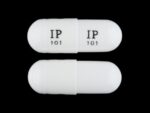
How long does Ativan stay in your system? It depends on which clock you mean. Lorazepam (brand name Ativan) runs on three timelines at once: how long you feel it, how long it stays in your body, and how long a lab can detect it. People often mix these up, which is why one website says “8 hours” and another says “a week.”
This guide separates the three clocks, shows the half-life math behind each one, and explains a drug-testing quirk that surprises many patients: standard urine screens often miss lorazepam, even in people taking it exactly as prescribed.
The three clocks at a glance
Here is the short answer before the details. All figures are typical for an immediate-release tablet in a healthy adult. Your own numbers may differ.
| Clock | What it measures | Typical timeline |
|---|---|---|
| 1. Effects (how long you feel it) | Calming and sedating action on the brain | Starts in about 20–30 minutes; blood level peaks around 2 hours; main effect lasts about 6–8 hours |
| 2. Elimination (how long it is in your body) | Active drug left in your bloodstream | Half-life about 12 hours; roughly 5 half-lives (about 60 hours, or 2.5–3 days) to clear about 97% |
| 3. Detection (how long a test can find it) | Drug or its breakdown product in a sample | Urine: often cited as about 3 days, sometimes longer with regular use. Blood: roughly 1–3 days. Saliva: roughly 1–2 days. Hair: weeks to months |
The math for Clock 2: each half-life cuts the remaining amount in half. After 5 half-lives you have 1/2 × 1/2 × 1/2 × 1/2 × 1/2 = 1/32 left, or about 3%. With a 12-hour half-life, 5 × 12 = 60 hours, which is 2.5 days. Because individual half-lives run longer in some people, 2.5 to 3 days is a fair everyday estimate.
Clock 1: How long Ativan effects last
The effects clock is the one you notice. It is also the shortest of the three. The calm, drowsy feeling fades long before the drug is fully gone from your blood, and well before a lab test would turn up clean.
Onset: when it kicks in
By mouth, lorazepam typically kicks in within half an hour, per the NHS lorazepam guide. The drug is absorbed well: the FDA prescribing information for Ativan puts oral bioavailability at about 90%, meaning most of each dose reaches your bloodstream.
Peak: when it is strongest
Blood levels peak around 2 hours after a tablet, per the FDA label. For many people, that is when drowsiness, slowed reaction time and unsteadiness are most noticeable. It is also the window when mixing it with alcohol or other sedatives is most dangerous.
Duration: how long does Ativan last?
The NHS describes the full sedating effect as lasting about 6 to 8 hours. That is why prescribers often split daily doses into two or three smaller ones for anxiety. The FDA label lists a usual range of 2 to 6 mg per day in divided doses, though your prescriber picks the amount based on your situation. Our guide to how Ativan is dosed for anxiety covers that in more depth.
Next-day effects: the “hangover” window
Here is where Clock 1 and Clock 2 overlap. Say you take a dose at 10 p.m. to help with anxiety-related sleep trouble. With a 12-hour half-life, about half of that dose is still circulating at 10 a.m. the next day. You may not feel “high” or sleepy, but your reaction time, balance and memory can still be dulled.
The NHS notes that daytime drowsiness is the most common side effect. Older adults feel this more, and StatPearls flags higher risk of falls, fractures and confusion in that group. For a full list of what to watch for, see our article on common and serious Ativan side effects.
Practical rule: “I feel fine” does not mean the drug is gone. Wait until you know how lorazepam affects you, especially the morning after, before you drive or use machinery.
Clock 2: How long Ativan stays in your body (lorazepam half-life)
The elimination clock tracks how fast your body clears the active drug. Its key number is the half-life: the time it takes for the amount in your blood to fall by half.
The lorazepam half-life numbers
- Oral tablets: about 12 hours for active lorazepam, per the FDA Ativan label.
- Injection studies: an average of 14 hours, give or take 5 hours, per the lorazepam injection clinical pharmacology data and StatPearls (NCBI Bookshelf, updated 2024).
- Lorazepam glucuronide (the inactive breakdown product): about 18 hours, per the FDA label.
That “give or take 5 hours” matters. It means some healthy people clear lorazepam in about 9 hours per half-life, while others take closer to 19. Across five half-lives, that difference adds up to more than two days.
How your body breaks lorazepam down
Lorazepam takes a simpler route out of the body than most benzodiazepines. Your liver attaches a sugar-like molecule (glucuronic acid) directly to the drug. This one-step process is called glucuronidation, and it produces lorazepam glucuronide.
Three facts about this pathway shape the whole timeline:
- No active metabolites. The glucuronide has no meaningful calming or sedating activity. Once lorazepam is converted, it stops working.
- No CYP450 step. Lorazepam skips the cytochrome P450 enzyme system that handles many drugs. StatPearls describes it as direct glucuronidation without a prior CYP450 step.
- Mostly out through urine. In a study described in the injection labeling, about 88% of a single 2 mg oral dose was recovered in urine, about 74% of it as the glucuronide. Only about 0.3% came out as unchanged lorazepam.
How this differs from diazepam (Valium)
Diazepam is a useful contrast. According to its 2023 FDA label, CYP3A4 and CYP2C19 enzymes turn diazepam into desmethyldiazepam, an active metabolite with a half-life of up to 100 hours. It also forms temazepam and oxazepam, which are active too. So diazepam keeps acting long after the parent drug falls, and its timeline stretches with age and liver disease.
Lorazepam has none of that cascade. What you see in its half-life is close to what you get. That is a big reason clinicians often consider it more predictable in older adults and people with liver problems.
Half-life decay table (idealized)
This table shows what fraction of a single dose of active lorazepam would remain over time, assuming a steady 12-hour half-life. Real bodies are messier, so treat it as a teaching model, not a personal forecast.
| Time after dose | Half-lives passed | Active drug remaining |
|---|---|---|
| 12 hours | 1 | 50% |
| 24 hours (1 day) | 2 | 25% |
| 36 hours | 3 | 12.5% |
| 48 hours (2 days) | 4 | 6.25% |
| 60 hours (2.5 days) | 5 | about 3% |
| 72 hours (3 days) | 6 | about 1.6% |
| 84 hours (3.5 days) | 7 | under 1% |
Mayo Clinic Laboratories uses a similar rule of thumb: it takes 5 to 7 half-lives to clear 98% of a drug dose. For lorazepam, that is roughly 60 to 84 hours, or about 2.5 to 3.5 days.
Now apply the same math to the glucuronide, with its 18-hour half-life. Five half-lives come to about 90 hours, or close to 4 days. That helps explain why urine tests can sometimes pick up lorazepam traces after the active drug in your blood has mostly faded.
Does it build up with daily use?
With regular dosing, each new dose adds to what is left from the last one. Levels rise for a few days and then level off at a “steady state,” which usually takes about 4 to 5 half-lives, or 2 to 3 days for lorazepam. The FDA label reports that blood levels stay proportional to dose, with no evidence of further buildup over up to 6 months of use.
Clock 3: Does Ativan show up on a drug test?
Detection is the longest clock, and the least predictable. Whether an Ativan drug test comes back positive depends on the sample type, the testing method, the cutoff level the lab uses, your dose and how often you take it.
Ativan detection time by test type
| Sample | Approximate window | What it shows | Notes |
|---|---|---|---|
| Urine | About 3 days; can be longer after regular use | Use over the past few days | Most common test. Mainly finds lorazepam glucuronide, which basic screens often miss |
| Blood | Roughly 1–3 days | Recent use and current level | Tracks the 12-hour half-life closely; mostly used in hospitals and forensic cases |
| Saliva (oral fluid) | Roughly 12–48 hours | Very recent use | Mirrors blood more than urine; some lab panels include lorazepam |
| Hair | Up to about 90 days for a 1.5-inch sample | Longer-term pattern | Drug takes about 5–10 days to grow out above the scalp; single low doses may not register |
Toxicology references commonly list about 3 days for short-acting benzodiazepines such as lorazepam in urine, compared with weeks for long-acting ones such as diazepam. Those are approximate figures. A highly sensitive lab method can sometimes pick up lower levels for longer, while a basic screen may not pick up lorazepam at all.
The glucuronide problem: why urine screens often miss lorazepam
Here is the nuance most “how long does lorazepam stay in urine” articles skip. Most urine drug tests happen in two steps:
- A screening immunoassay. This is a quick, cheap test that uses antibodies to look for a drug class. Many benzodiazepine screens are built around oxazepam or nordiazepam, which are breakdown products of diazepam and similar drugs.
- A confirmation test. A lab method such as LC-MS/MS (liquid chromatography with tandem mass spectrometry) identifies the exact drug and measures how much is present.
The trouble is that the screening antibodies react poorly with lorazepam glucuronide, and that is almost all there is in urine. A 2023 study in the Journal of Mass Spectrometry and Advances in the Clinical Lab noted that lorazepam is especially prone to false-negative results on standard benzodiazepine immunoassays. When the lab added an enzyme (beta-glucuronidase) to split the glucuronide back into lorazepam, detection improved sharply. Lorazepam-only confirmations rose about 30-fold after that change.
In plain terms: someone taking Ativan exactly as prescribed can test “negative for benzodiazepines” on a basic cup test or standard lab screen. Unless the lab uses that enzyme step (hydrolysis) or goes straight to LC-MS/MS, lorazepam can slip through.
This matters most for patients. In pain clinics and addiction care, a negative screen can be wrongly read as “not taking the medicine.” If your result surprises your clinician, it is reasonable to ask whether a confirmation test with hydrolysis or LC-MS/MS was done.
If you have a prescription: the MRO process
In regulated workplace testing in the US, a lab-confirmed positive result goes to a Medical Review Officer (MRO). This is a licensed physician who reviews results before they reach your employer. If you have a valid prescription that explains the result, the MRO will usually ask for proof, such as your prescription details or pharmacy records.
When a legitimate medical explanation checks out, the result is typically reported to the employer as negative. The MRO may still raise a safety concern if your job involves safety-sensitive duties, such as driving commercial vehicles, and the medication could impair you.
- Keep your prescription label or pharmacy printout handy.
- Answer the MRO’s call; that interview is your chance to explain.
- Taking someone else’s lorazepam is not a valid explanation and can carry legal and job consequences.
We don’t offer advice on beating or “flushing” a drug test. Water loading, detox drinks and similar tricks don’t change how your liver processes lorazepam, and diluted samples are often flagged anyway. If a test worries you because you are using lorazepam without a prescription, that is a sign to talk with a clinician. Free, confidential help is available from the SAMHSA National Helpline at 1-800-662-4357.
How long does Ativan stay in your system for you? What changes the timeline
The averages above describe a healthy adult. These factors can shift your personal timeline in either direction.
Age
Age has a smaller effect on lorazepam than on many benzodiazepines. The FDA label reports that total body clearance was about 20% lower in people aged 60 to 84 than in those aged 19 to 38. That is modest compared with diazepam, whose half-life rises by about one hour for each year of age, per its label.
Older adults are still more sensitive to lorazepam, even if they clear it at a similar pace. The label suggests a lower starting dose of 1 to 2 mg per day for elderly or debilitated patients, and the Beers Criteria list benzodiazepines, including lorazepam, as potentially inappropriate for older adults.
Liver disease
Because lorazepam skips the cytochrome P450 system, liver disease affects it less than many benzodiazepines. In a study cited in the injection labeling, clearance after a 2 mg IV dose was not substantially different between men with cirrhosis and healthy men.
Compare that with diazepam, whose average half-life rises 2- to 5-fold in mild to moderate cirrhosis, per its label. Even so, the Ativan label still urges caution in severe liver failure, because benzodiazepines can worsen hepatic encephalopathy (confusion caused by liver failure). Lower doses may be enough.
Kidney disease
Kidney disease matters more for the breakdown product than for the active drug. In the injection labeling data, active lorazepam’s half-life was about 25% longer in kidney impairment, but total clearance did not change. The glucuronide’s half-life, though, was prolonged by 55% in kidney impairment and by 125% in people on hemodialysis.
Since the glucuronide is what urine tests look for, people with reduced kidney function may test positive for longer than the averages suggest. StatPearls notes that lorazepam is still considered a reasonable benzodiazepine choice in end-stage kidney disease, with appropriate precautions.
Pregnancy and breastfeeding
Lorazepam crosses the placenta, according to the FDA label, and the label advises avoiding it during the first trimester. Babies exposed late in pregnancy may show sedation, breathing problems or withdrawal after birth. The drug also passes into breast milk. Because newborns clear lorazepam far more slowly than adults, a dose that wears off for the parent can linger in the baby. If you are pregnant or nursing, any decision about lorazepam belongs with your prescriber.
Single dose vs long-term use
A single 0.5 mg tablet and months of 2 mg three times a day leave very different trails. Higher doses mean higher starting levels, which take longer to drop below a lab’s cutoff. Steady daily use also keeps levels at a plateau, so detection windows after stopping tend to be at the longer end of the ranges.
Body weight and body fat
Body composition affects some benzodiazepines strongly: the Xanax label reports a mean alprazolam half-life of 21.8 hours in people with obesity, versus about 11 hours in healthy adults. The Ativan label reports no similar weight effect for lorazepam.
Other medicines
Because lorazepam avoids CYP450, it has fewer interactions than drugs like alprazolam or diazepam. Two exceptions slow its glucuronidation and stretch its timeline, per the FDA label:
- Valproate (a seizure and mood medicine) raises lorazepam levels and lowers its clearance. The label advises cutting the lorazepam dose by about 50%.
- Probenecid (a gout medicine) lengthens lorazepam’s half-life and lowers clearance, which can make effects start faster or last longer. The label again advises about a 50% dose reduction.
Don’t adjust anything on your own. If you take either medicine, your prescriber and pharmacist should already be factoring it in. Separately, any other sedating drug (opioids, sleep aids, some antihistamines, alcohol) won’t change how long lorazepam stays in your system, but it greatly increases how strongly it affects you.
How Ativan compares with other benzodiazepines
Half-life drives all three clocks, so comparing it across common benzodiazepines explains why some show up on tests for days and others for weeks.
| Drug | Half-life (parent drug) | Active metabolites? | Main clearance route |
|---|---|---|---|
| Ativan (lorazepam) | About 12 hours (14 ± 5 in IV studies) | No | Direct glucuronidation |
| Xanax (alprazolam) | About 11 hours on average (range 6.3–26.9); 16 hours in older adults | Minor, low activity | CYP3A4 |
| Klonopin (clonazepam) | Typically 30–40 hours | Label does not describe active ones | Liver metabolism, CYP3A involved |
| Valium (diazepam) | Up to 48 hours | Yes: desmethyldiazepam, up to 100 hours | CYP3A4 and CYP2C19 |
- Ativan and Xanax have similar half-lives, but Xanax depends on CYP3A4, so more drug interactions and liver problems can change its timeline. Our Xanax and Ativan comparison looks at other differences.
- Klonopin and Valium stay in the body far longer, which usually means longer detection windows and a gentler drop-off when stopped. See our breakdown of Klonopin versus Valium for more.
- Valium’s long-lived active metabolite is why diazepam can be detected in urine for weeks after heavy use, while lorazepam is usually measured in days.
Sleep medicines follow similar logic. If you’re curious about a non-benzodiazepine comparison, our guide on how long Ambien stays in your system applies the same half-life reasoning to zolpidem.
Why the timeline matters for your safety
Asking how long does Ativan stay in your system isn’t just about drug tests. The three clocks affect real everyday decisions.
The FDA boxed warning
Every benzodiazepine label has carried a strengthened FDA boxed warning since 2020, the agency’s most serious alert level. It covers three risks:
- Abuse, misuse and addiction, which can occur even at prescribed doses and can lead to overdose or death.
- Physical dependence and withdrawal, including life-threatening reactions such as seizures if the drug is stopped suddenly or cut too quickly.
- Serious risks with opioids, including profound sedation, slowed breathing, coma and death.
Alcohol
Because alcohol and lorazepam each dampen brain activity and breathing, combining them compounds the danger. Because a meaningful share of a dose is still active a full day later, “I took it last night” doesn’t make a drink safe the next evening. Our article on mixing Ativan with alcohol covers the risks and warning signs in detail.
Opioids and other sedatives
The opioid risk is the reason the FDA boxed warning exists in its current form. Prescription pain medicines, some cough syrups, and other sedatives can combine with leftover lorazepam to dangerously slow breathing. Tell every prescriber, dentist and pharmacist that you take lorazepam, even if your last dose was a day or two ago.
Driving and machinery
The FDA label says not to drive or operate heavy machinery until you know how lorazepam affects you. Effects that feel gone at hour 8 may still slow your reactions at hour 12. Plan rides ahead, especially when you first start or after a dose change.
Surgery and procedures
Anesthesia and surgical pain medicines are central nervous system depressants too. Tell your surgical team when you last took lorazepam and how often you take it. Don’t stop it on your own before surgery if you take it daily; abrupt stopping carries its own risks. Your care team will decide how to manage it.
Withdrawal timing
Lorazepam’s short-to-intermediate half-life also explains why withdrawal can arrive relatively quickly after a dose is missed or stopped in someone who is dependent. As levels fall over a day or two, symptoms such as rebound anxiety, insomnia, tremor and, in serious cases, seizures can appear.
That’s why stopping should always be planned with a clinician. The 2025 Joint Clinical Practice Guideline on Benzodiazepine Tapering, led by the American Society of Addiction Medicine, says clinicians should not stop benzodiazepines abruptly in people likely to be dependent. It describes clinician-planned tapers that often start with small reductions, such as 5% to 10% of the daily dose every 2 to 4 weeks, adjusted to how the patient responds. Learn more in our guide to Ativan withdrawal symptoms and timelines.
Emergency signs: If someone who took lorazepam is very hard to wake, breathing slowly or shallowly, or has blue lips, call 911 right away. For questions about a possible overdose, call Poison Control at 1-800-222-1222. If you’re having thoughts of harming yourself, call or text 988 to reach the Suicide & Crisis Lifeline.
Frequently asked questions
How long does 1 mg of Ativan stay in your system?
The half-life doesn’t depend on dose, so 1 mg follows the same roughly 12-hour half-life as larger doses. Most of the active drug clears in about 2.5 to 3 days. The calming effect usually lasts about 6 to 8 hours. A smaller dose may fall below a test’s cutoff sooner than a large one, but exact windows vary.
How long does lorazepam stay in urine?
Clinical references commonly cite about 3 days for short-acting benzodiazepines like lorazepam. It may be longer after regular, higher-dose use or with reduced kidney function. Keep in mind that many standard urine screens detect lorazepam poorly, so a negative screen doesn’t prove it’s gone.
Will Ativan show up on a 5-panel or 10-panel drug test?
Many basic 5-panel tests don’t include benzodiazepines at all. Expanded panels, such as many 10-panel tests, often do, but the benzodiazepine screen may still miss lorazepam because of the glucuronide issue. Labs that use enzyme hydrolysis or LC-MS/MS confirmation are much more likely to detect it.
Can I drink alcohol the day after taking Ativan?
About a quarter of a dose may still be active 24 hours later, so the combination can still add up. Ask your prescriber about your specific situation, and avoid alcohol altogether if you take lorazepam regularly.
Does drinking water or exercising flush Ativan out faster?
No. Lorazepam is cleared at the rate your liver can process it. Extra water or exercise won’t speed that up in any meaningful way. Time is the only factor that reliably lowers levels.
Is lorazepam safer than other benzodiazepines for people with liver disease?
Clinicians often prefer it in liver disease because it skips CYP450 metabolism and has no active metabolites, so its clearance changes less. It still carries all the benzodiazepine risks, and severe liver failure calls for extra caution. The choice belongs to your care team.
Medical disclaimer: The timelines on this page are population averages, not a prediction for your body or a guide for passing any test. Drug timelines and test results vary from person to person. Never start, stop or change a lorazepam dose without talking to your prescriber. In an emergency, call 911.
References
- US Food and Drug Administration. Ativan (lorazepam) tablets prescribing information, revised 2021.
- Pfizer Medical Information. Lorazepam injection: clinical pharmacology.
- Ghiasi N, Bhansali RK, Marwaha R. Lorazepam. StatPearls, NCBI Bookshelf, updated May 2024.
- NHS. About lorazepam.
- Comparison of two highly sensitive benzodiazepine immunoassay lab developed tests for urine drug testing in clinical specimens. Journal of Mass Spectrometry and Advances in the Clinical Lab, 2023.
- Mayo Clinic Laboratories. Benzodiazepines confirmation, random, urine: test overview.
- US Food and Drug Administration. FDA requiring Boxed Warning updated to improve safe use of benzodiazepine drug class, September 2020.
- American Society of Addiction Medicine. New benzodiazepine tapering guideline emphasizes patient-centered approach, June 2025.